
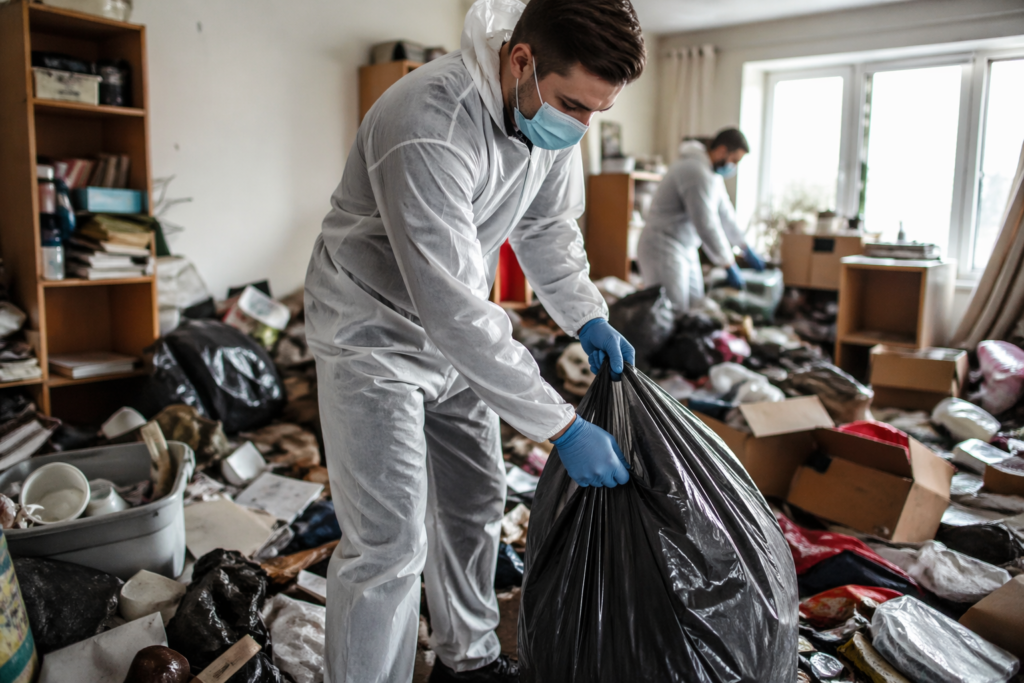
Strong and persistent property odours can be difficult to remove because the smell is often a symptom of a deeper problem. Opening windows, using air fresheners or applying a conventional cleaning product may provide temporary relief, but the odour can quickly return when the underlying source remains.
Persistent smells can come from accumulated waste, spoiled food, mould, damp materials, nicotine residue, animal waste, sewage, bodily fluids, long term neglect or decomposition. In severely neglected properties, odours may also have penetrated carpets, flooring, furniture, walls and other porous materials.
This is where specialist cleaning teams take a different approach. Rather than simply trying to make a property smell fresher, they investigate where the odour is coming from, assess the condition of the property, remove contaminated or heavily affected materials where appropriate, clean and sanitise suitable surfaces, and then use targeted odour treatment.
Vamoose Cleaning Services provides specialist cleaning services for difficult property conditions across London and surrounding areas, including neglected properties, hoarding situations, extreme cleaning, trauma cleaning and biohazard cleaning.
What Causes Strong and Persistent Property Odours?
The first step in dealing with a strong property odour is understanding what is causing it.
A smell can originate from a single source or from several problems occurring at the same time. For example, a neglected property may contain rubbish, damp carpets, spoiled food, mould and heavily soiled surfaces. Treating only one of these problems may not remove the overall smell.
Common sources include:
- Accumulated household waste
- Spoiled food
- Animal waste
- Human waste
- Bodily fluids
- Decomposition
- Mould and damp
- Nicotine and cigarette smoke
- Grease and cooking residue
- Old carpets and underlay
- Upholstery
- Contaminated furniture
- Sewage problems
- Pest activity
- Long term property neglect
- Strong chemical contamination
- Stagnant water
Vamoose Cleaning Services explains that neglected properties can develop heavy dirt, odours, waste build up, mould, grease and stained surfaces when they have not been maintained for long periods.
Why Regular Cleaning May Not Remove a Persistent Smell
Regular domestic cleaning is designed for normal household maintenance. Persistent property odours can require a much more detailed approach.
Consider a carpet that smells strongly of urine. Cleaning the visible surface may improve its appearance, but if contamination has reached the underlay or flooring beneath it, the smell may return.
The same principle applies to decomposition. Vamoose explains that decomposition odours can affect carpets, underlay, floorboards, concrete, furniture, wall materials and other porous surfaces. The source needs to be addressed before odour treatment can provide a reliable result.
This is why specialist teams do not normally begin with an air freshener or fragrance treatment.
They begin by asking:
Where is the odour coming from?
What has caused it?
How far has the contamination spread?
Which materials can be cleaned?
Which materials may need to be removed?
Does the property require sanitisation or decontamination?
Is there a waste or biohazard issue that needs specialist handling?
The answers determine the cleaning method.
How Do Specialist Cleaning Teams Investigate Property Odours?
A professional odour removal project normally starts with an assessment.
The team needs to understand the condition of the property before deciding which cleaning methods and equipment are appropriate.
An assessment may consider:
- The location of the strongest smell
- The type of odour
- The rooms affected
- The age of the problem
- Visible staining
- Waste accumulation
- Damp or mould
- Flooring materials
- Carpets and underlay
- Upholstered furniture
- Wall and ceiling surfaces
- Ventilation
- Pest activity
- Plumbing problems
- Previous cleaning attempts
- Potential biological contamination
- Access and waste removal requirements
A strong smell throughout an entire property does not necessarily mean every room is contaminated. Odours can travel through ventilation systems, gaps, corridors and adjoining spaces.
A specialist team therefore looks for the original source rather than treating every area in exactly the same way.
Step 1: Identify the Source of the Odour
The most important part of professional odour treatment is identifying the source.
For example, a property may have a strong smell because:
- A fridge containing spoiled food has been left for several weeks.
- Rubbish has accumulated inside the kitchen.
- A carpet has absorbed urine.
- A room has experienced long term smoking.
- Mould has developed behind furniture.
- Waste has accumulated during hoarding.
- A sewage problem has affected flooring.
- Bodily fluids have contaminated porous materials.
- Decomposition has affected flooring or furniture.
Each situation requires a different response.
Using the wrong product can sometimes make the situation more difficult by masking the original smell rather than addressing it.
Step 2: Remove the Material Creating the Smell
Once the source has been identified, the next stage may involve removing the material responsible for the odour.
This could include:
- Rubbish
- Spoiled food
- Contaminated bedding
- Severely affected carpets
- Damaged underlay
- Heavily contaminated furniture
- Waste materials
- Unsalvageable soft furnishings
- Other materials that cannot be safely restored
Removal is particularly important when a material has absorbed contamination deeply.
A carpet may look reasonably clean after surface treatment while still producing an unpleasant smell because contamination remains underneath.
In a hoarding or severely neglected property, clearance may need to happen before deep cleaning can begin. Vamoose describes specialist property clearance as potentially including unwanted item removal, waste separation, specialist cleaning, sanitisation, odour treatment, decontamination and safe waste disposal.
Step 3: Deal With Waste Responsibly
Odour producing waste cannot simply be placed outside and forgotten about.
Waste needs to be handled responsibly, particularly when there is a possibility that it may be hazardous.
UK Government guidance states that waste must be managed safely and that those transferring waste should ensure it is given to an authorised person or establishment.
This is particularly relevant to specialist property cleaning because a clearance project can involve much more than ordinary household rubbish.
A property may contain contaminated materials, chemicals, sharps, bodily fluid affected items or other potentially hazardous waste.
Where hazardous waste is involved, additional requirements apply. GOV.UK explains that businesses producing or handling hazardous waste have specific responsibilities depending on whether they are the producer, holder, carrier or consignee.
A professional specialist cleaning company should therefore have appropriate procedures for identifying, handling and disposing of waste.
Step 4: Deep Clean the Affected Area
Once the source has been removed, the cleaning process can begin.
The exact cleaning method depends on the material and contamination involved.
Hard surfaces may be cleaned and sanitised using suitable professional products.
Areas that may require attention include:
- Floors
- Skirting boards
- Doors
- Door frames
- Walls
- Kitchen surfaces
- Cupboards
- Appliances
- Bathroom surfaces
- Furniture
- Window areas
- Hard to reach spaces
- Areas beneath or behind furniture
A specialist clean is not simply about making surfaces look better. The objective is to reduce the material and contamination responsible for the odour.
Vamoose describes its specialist cleaning process as being tailored around the condition of the property, with cleaning, sanitation, waste removal, odour treatment and final inspection included where required.
Step 5: Treat Porous Materials Carefully
Porous materials are one of the biggest challenges when removing persistent property odours.
Materials such as carpet, underlay, upholstery, mattresses, untreated wood and some wall materials can absorb liquids and odour producing substances.
If the contamination has penetrated deeply, surface cleaning may not be sufficient.
A specialist team may need to determine whether the material can be restored or whether replacement is more appropriate.
For example, if a carpet has been affected by a severe biological contamination, simply spraying deodoriser over the carpet is unlikely to solve the underlying problem.
The same applies to furniture.
A sofa may look clean on the outside while contamination has penetrated into internal padding.
Professional assessment helps determine whether cleaning, treatment, removal or replacement is the appropriate option.
Step 6: Address Mould and Damp Related Odours
Mould and damp can produce persistent musty smells that return even after cleaning.
If the underlying moisture problem remains, cleaning alone may not provide a lasting solution.
Specialist cleaning teams may therefore look for:
- Visible mould
- Damp patches
- Condensation
- Water damaged materials
- Leaks
- Poor ventilation
- Moisture trapped behind furniture
- Damp flooring
- Areas with repeated water exposure
A cleaning company can address affected surfaces, but the underlying source of moisture may require a plumber, builder, damp specialist or other contractor.
This distinction is important.
Professional cleaning can remove contamination from an affected area, but it cannot permanently solve an active plumbing leak or structural moisture problem.
Step 7: Deal With Odours After Cleaning the Source
Once the source has been removed and affected areas have been cleaned, specialist odour treatment can be used.
This is an important difference between professional odour removal and simply using fragrance.
The sequence is generally:
Identify the source → remove or control the source → clean → sanitise where appropriate → treat affected materials → apply targeted odour treatment → inspect again.
Vamoose’s information on decomposition odours follows this same principle. The company explains that odour treatment should come after source removal, cleaning and treatment of affected materials.
The exact odour treatment method depends on the circumstances and should be selected according to the type of contamination and the property.
Why Air Fresheners Often Fail
Air fresheners can make a room smell different, but they do not necessarily remove the cause of the original odour.
Imagine a property with a strong smell caused by:
- Rotting food
- Soaked carpet
- Waste accumulation
- Mould
- Animal waste
Adding fragrance does not remove these sources.
It simply introduces another smell into the environment.
This is why professional teams focus on source removal before deodorisation.
A strong fragrance immediately after cleaning can also make it difficult to determine whether an underlying odour remains.
A proper final assessment should therefore consider whether the original smell has actually been reduced rather than whether the room simply smells strongly of cleaning products.
How Specialist Teams Deal With Hoarding Related Odours
Hoarding situations can create particularly difficult odour problems.
Large quantities of stored items can restrict access to floors, walls and ventilation areas. Food waste, rubbish, animal waste, mould and poor sanitation may also be present.
In more serious cases, rooms may no longer be fully usable.
Vamoose’s guidance on the different levels of hoarding notes that stronger odours can appear as property conditions deteriorate, while severe situations may involve contamination, mould, pests and significant hygiene concerns.
A specialist hoarding clean may therefore involve several stages:
Property Assessment
The team assesses the condition and identifies safety concerns.
Sorting and Clearance
Belongings and waste are separated according to the agreed plan.
Waste Removal
Unwanted material is removed through appropriate waste handling procedures.
Deep Cleaning
Surfaces are cleaned after access has been restored.
Sanitisation
Appropriate areas are sanitised where required.
Odour Treatment
Persistent smells are addressed after the main sources have been removed.
Final Inspection
The completed areas are checked before the project is considered finished.
The approach should also remain respectful.
Hoarding situations can be emotionally difficult for residents and families. Professional support should focus on restoring the property without unnecessary judgement.
How Specialist Teams Deal With Neglected Property Odours
A neglected property may develop several odour sources simultaneously.
For example, a vacant property could have:
- Old food
- Rubbish
- Dust
- Mould
- Damp
- Dirty carpets
- Grease
- Stagnant water
- Animal waste
- Poor ventilation
Cleaning one surface will not necessarily solve the overall problem.
This is why neglected property cleaning often requires a structured restoration process.
Vamoose states that its neglected property cleaning service is designed for homes that have become difficult, unsafe or unhygienic to manage, with services including deep cleaning, sanitisation and property restoration cleaning.
How Specialist Teams Deal With Trauma and Biohazard Odours
Some property odours are connected to traumatic incidents or biological contamination.
These situations require a different level of care because the priority is not simply appearance or freshness.
A specialist trauma or biohazard cleaning team may need to:
- Establish the affected area
- Assess contamination
- Use appropriate protective equipment
- Remove affected materials
- Clean suitable surfaces
- Apply appropriate sanitation procedures
- Manage contaminated waste
- Treat persistent odours
- Inspect the area after cleaning
Vamoose provides trauma and biohazard cleaning for situations involving biological hazards and contamination, with its service information describing specialist protective measures, sanitation and odour treatment.
These situations should not normally be approached as an ordinary domestic cleaning job.
Decomposition Odours Require Particular Care
Decomposition is one of the most challenging sources of persistent property odour.
The smell can remain after the original incident because fluids and odour producing compounds may have entered porous materials.
The affected area may include:
- Carpet
- Underlay
- Floorboards
- Furniture
- Bedding
- Mattresses
- Skirting boards
- Wall materials
- Other porous surfaces
Vamoose’s specialist guidance explains that decomposition odour can require assessment, contamination removal, cleaning, disinfection, treatment of affected materials, ventilation and targeted odour neutralisation.
The property should also only be entered and cleaned when the relevant authorities have released the scene and the person arranging the work has appropriate authority.
Why Professional Equipment Matters
Severe property odours can be difficult to address using household cleaning products and equipment.
Specialist cleaning teams may use commercial grade equipment selected according to the condition of the property.
Depending on the job, this may include:
- Professional extraction equipment
- HEPA filtration vacuums
- Commercial sanitation equipment
- Specialist cleaning products
- Protective equipment
- Waste handling equipment
- Odour treatment equipment
The equipment alone is not the solution.
The important factor is knowing when and how to use it.
For example, aggressive cleaning without identifying the source can spread contamination or damage a material that could otherwise have been restored.
Why Risk Assessment Is Important
Strong odours can sometimes indicate a safety issue rather than simply a cleanliness issue.
Before starting specialist work, the team may need to consider:
- Biological contamination
- Sharps
- Chemical exposure
- Mould
- Pest activity
- Structural damage
- Unsafe access
- Waste accumulation
- Electrical risks
- Confined or poorly ventilated areas
- Contaminated materials
Vamoose states that specialist cleaning projects can involve risk assessments, insurance, trained staff and appropriate procedures depending on the situation.
A risk based approach helps the team decide what equipment, protective measures, cleaning products and waste procedures are appropriate.
Can Strong Property Odours Be Removed Completely?
In many situations, professional cleaning can significantly reduce or remove a persistent odour.
However, the result depends on the source and how deeply the contamination has affected the property.
Some materials can be cleaned successfully.
Others may need specialist treatment.
Some severely affected materials may need to be removed and replaced.
The most important factor is whether the source can be identified and properly addressed.
If the source continues to exist, the odour can return.
For example, cleaning a mould affected wall without addressing an ongoing leak may provide only temporary improvement.
Similarly, deodorising a contaminated carpet without dealing with the underlay may leave the underlying problem unresolved.
How Long Does Professional Odour Removal Take?
There is no single timeframe for persistent property odour removal.
The duration depends on:
- Size of the property
- Number of affected rooms
- Type of odour
- Severity of contamination
- Amount of waste
- Type of flooring
- Number of porous materials affected
- Furniture requiring treatment
- Access
- Waste removal requirements
- Pest activity
- Need for specialist sanitation
- Whether materials need to be removed
- Whether additional restoration is required
A small property with one isolated odour source may be treated relatively quickly.
A heavily neglected property with years of accumulated waste, contamination and embedded odours can require considerably more work.
This is why a specialist assessment is generally more useful than estimating the job solely from the number of bedrooms.
Can You Stay in the Property During Odour Treatment?
Whether occupants can remain in the property depends on the condition and type of work.
For a straightforward deep clean, it may be possible to remain away from the immediate working area.
For severe contamination, biohazard cleaning, strong chemical exposure or extensive clearance, temporary absence may be recommended.
Vamoose notes that whether families can remain during trauma cleaning depends on contamination levels and the circumstances of the property.
The cleaning company should explain any access restrictions before work begins.
What Should You Tell a Specialist Cleaning Company?
When requesting an assessment, provide as much useful information as possible.
You can explain:
- Where the smell is strongest
- How long the smell has been present
- Whether it is getting worse
- Whether the property has been vacant
- Whether there is visible mould
- Whether there is accumulated waste
- Whether carpets or furniture are affected
- Whether animals have lived at the property
- Whether there has been a leak or sewage problem
- Whether there has been a traumatic incident
- Whether there are known biological hazards
- Whether the property needs to be cleared before cleaning
- Your preferred timeframe
Photographs may also help the cleaning team understand the situation before attending, although an on site assessment may still be necessary.
Who May Need Specialist Property Odour Removal?
Persistent property odours can affect many different types of property and clients.
Specialist cleaning services may be arranged by:
- Homeowners
- Landlords
- Letting agents
- Property managers
- Housing associations
- Local authorities
- Executors
- Families
- Social care teams
- Support organisations
- Businesses
- Insurers
Landlords and property managers may particularly need specialist support after a tenancy where a property has been left heavily neglected.
Families may need help after bereavement, hoarding or other difficult circumstances.
Housing and support professionals may need cleaning assistance where property conditions are affecting safe living or access to essential areas.
Local Specialist Cleaning for Persistent Property Odours
Vamoose Cleaning Services supports specialist cleaning projects across London and surrounding areas, including locations such as Ruislip, Uxbridge, Hillingdon, Harrow, Ealing, Watford and other parts of London and nearby counties. Its service information also covers specialist cleaning across areas including Hertfordshire, Buckinghamshire, Surrey and Middlesex.
If you are arranging a specialist clean, providing the full property postcode can help the team understand the location, access requirements and likely logistics.
For example, a property in a block of flats may require different planning from a detached house because equipment and waste may need to pass through communal areas.
What Makes Specialist Odour Removal Different From Standard Cleaning?
The difference is the level of investigation and the type of problem being addressed.
| Standard Cleaning | Specialist Odour Removal |
| Focuses mainly on routine dirt | Focuses on the source of persistent odour |
| Suitable for normal household conditions | Suitable for difficult or unusual property conditions |
| Usually surface focused | Can involve deeper investigation |
| Limited waste handling | May include specialist clearance |
| General cleaning products | Products selected for the situation |
| Routine equipment | Commercial and specialist equipment where required |
| Regular household maintenance | Property restoration and remediation support |
| Limited contamination concerns | Can involve sanitation and decontamination |
| A property does not necessarily need to be severely contaminated to benefit from specialist cleaning. Sometimes the issue is simply an odour that has remained despite repeated conventional cleaning attempts. |
Common Mistakes When Trying to Remove Property Odours
Using Too Much Fragrance
Strong fragrance can hide an odour temporarily without solving its cause.
Cleaning Only What Is Visible
Contamination can exist underneath carpets, behind furniture or within porous materials.
Ignoring Waste
Waste can continue producing unpleasant smells until it is removed.
Painting Over the Problem
Painting can hide staining but does not necessarily resolve contamination beneath the surface.
Ignoring Damp
Mould and musty odours can return if the underlying moisture source remains.
Using the Wrong Cleaning Product
Some materials can be damaged by inappropriate chemicals.
Attempting Hazardous Clearance Without Proper Procedures
Potentially hazardous waste requires responsible handling and disposal. GOV.UK guidance makes clear that waste should be managed safely and transferred only to appropriately authorised parties.
How do professional cleaners remove strong property odours?
Professional cleaners first identify the source of the smell. They may then remove affected waste or materials, deep clean surfaces, sanitise where appropriate, treat porous materials and use targeted odour treatment after the source has been addressed.
Why does a property still smell after deep cleaning?
The odour may remain because the original source has not been removed or because contamination has penetrated porous materials such as carpet, underlay, furniture or flooring.
Can specialist cleaners remove mould smells?
They can clean and treat affected areas, but any ongoing moisture source may also need to be addressed. If a leak or structural damp problem continues, the smell can return.
Can specialist cleaning remove hoarding related odours?
Yes. Specialist hoarding cleaning can combine clearance, waste removal, deep cleaning, sanitation and odour treatment. The exact process depends on the condition of the property.
Can decomposition odour be removed?
Decomposition odours can often be substantially reduced or removed through specialist cleaning, contamination removal, treatment of affected materials and controlled odour treatment. The complexity depends on how far the contamination has spread.
Are air fresheners enough for persistent property smells?
Usually not when the smell is caused by contamination, waste, mould, decomposition or deeply affected materials. Air fresheners may mask the smell temporarily but do not remove the source.
Do carpets always need to be replaced when they smell?
No. The decision depends on the material, contamination and whether the carpet and underlying layers can be safely restored. A specialist assessment can determine the appropriate approach.
How long does odour removal take?
The timeframe varies according to the size of the property, severity of the odour, source, contamination, waste volume, affected materials and access. A specialist assessment gives a more reliable estimate.
Is specialist odour removal suitable for landlords?
Yes. Landlords and property managers may require specialist cleaning after long term neglect, severe waste accumulation, hoarding, contamination or difficult tenancies.
Is specialist property cleaning available in London?
Yes. Vamoose Cleaning Services provides specialist cleaning support across London and surrounding areas, including services for neglected properties, hoarding, extreme cleaning, trauma and biohazard situations.
How to Choose a Specialist Cleaning Team
When choosing a company for persistent property odours, do not focus only on the cheapest quotation.
Look for evidence that the company understands the underlying cause of the problem.
Important questions include:
- Do they provide an assessment before starting?
- Are their cleaners experienced with specialist property conditions?
- Do they have appropriate insurance?
- Do they have procedures for hazardous situations?
- Can they handle waste responsibly?
- Do they provide odour treatment as part of a wider cleaning process?
- Can they work discreetly?
- Do they explain what may need to be removed?
- Can they provide a clear scope of work?
Vamoose highlights experienced, DBS checked and fully insured teams for its specialist cleaning services and describes structured approaches for difficult property conditions.
Get Help With a Persistent Property Odour
A strong property smell is not always a simple cleaning problem. If an odour keeps returning after normal cleaning, there may be an underlying source that needs professional assessment.
Whether the cause is severe neglect, hoarding, waste, mould, animal contamination, biological contamination or another difficult property condition, the most effective approach is to identify the source first and then select the appropriate cleaning and treatment method.
Vamoose Cleaning Services provides specialist cleaning, deep cleaning, extreme cleaning, hoarding cleaning, neglected property cleaning, trauma cleaning and biohazard cleaning across London and surrounding areas.
You can also review the company’s Google Business Profile for additional business information and reviews.
For professional help with a persistent property odour, contact Vamoose Cleaning Services on 01895 717 115 or request an assessment through the website. The team can discuss the condition of the property, likely source of the odour and the most appropriate next steps.