
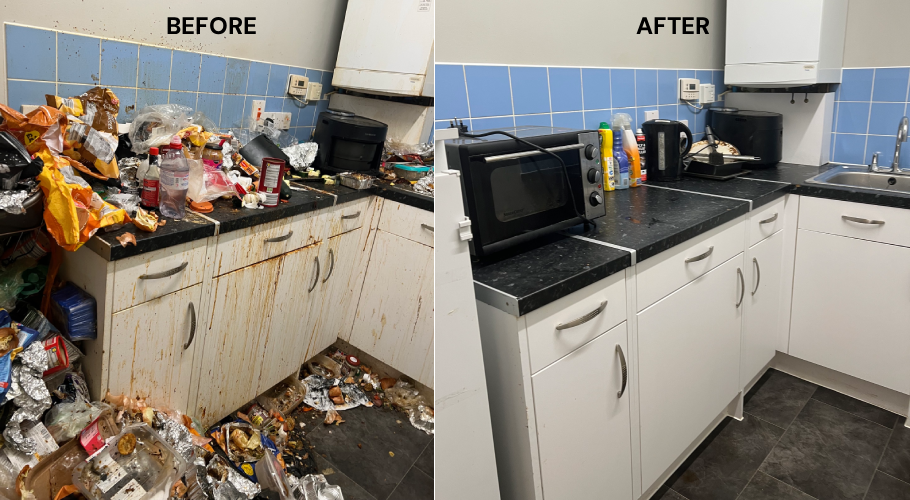
A property cannot always be professionally cleaned straight away. In some situations, the cleaning team first needs to deal with excessive clutter, waste, restricted access, hazardous materials, contamination, pests, structural problems or other risks before a proper clean can begin.
This is particularly important when a property has been neglected for a long period, affected by hoarding, left vacant, damaged by a difficult tenancy, or contaminated by biological or hazardous substances. Vamoose Cleaning Services provides specialist cleaning for challenging properties where a standard domestic cleaning service may not be appropriate. Its services include neglected property cleaning, hoarder cleaning, specialist deep cleaning, sanitisation and property restoration.
The key point is simple: professional cleaning works best when the property is safe, accessible and suitable for the cleaning process to begin.
What Can Prevent a Property From Being Professionally Cleaned?
Several conditions can prevent or delay professional cleaning. The most common include:
- Excessive clutter blocking rooms or surfaces
- Large quantities of rubbish or unwanted belongings
- Hazardous or contaminated materials
- Needles, sharps or other dangerous objects
- Severe pest infestation
- Serious mould or damp problems
- Sewage or contaminated water
- Structural damage
- Unsafe access
- Areas that cannot be safely entered
- Strong biological or decomposition odours
- Items that need specialist disposal
- Fire or smoke damage
- A property that needs clearance before cleaning
- Building or renovation work that has not finished
Not every difficult property will have all of these problems. However, even one serious issue can change the type of cleaning required.
For example, a cleaner may be able to deep clean a dirty kitchen in several hours. If the same kitchen contains piles of rubbish, animal waste, broken glass or contaminated materials, the job becomes a specialist cleaning and clearance project rather than a standard deep clean.
Why Can’t a Cleaner Simply Start Cleaning?
Professional cleaning involves more than applying cleaning products to dirty surfaces.
The team needs to be able to enter the property safely, move around rooms, reach the areas being cleaned and use appropriate equipment. Where waste, contamination or hazardous materials are present, these issues may need to be controlled or removed before ordinary cleaning can take place.
Vamoose explains that specialist property clearance can include removal of unwanted items and accumulated waste, sorting belongings where requested, specialist cleaning and sanitisation, odour treatment, decontamination where required, safe waste disposal and final deep cleaning.
This means clearance and cleaning are sometimes two connected stages of the same property restoration project.
1. Excessive Clutter Can Prevent Professional Cleaning
One of the most common barriers is excessive clutter.
A cleaner needs access to floors, walls, furniture, cupboards, appliances and other surfaces. If possessions cover these areas, the cleaning team may not be able to clean effectively without first moving or sorting them.
This does not necessarily mean that everything has to be removed.
In many properties, the first step is simply to create safe working routes and identify what should stay, what should be moved and what can be removed.
When does clutter become a cleaning problem?
Clutter becomes a serious obstacle when it:
- Blocks doorways
- Prevents access to rooms
- Covers floors
- Blocks stairs
- Prevents access to bathrooms
- Covers kitchen surfaces
- Restricts ventilation
- Makes electrical equipment difficult to access
- Prevents cleaners from reaching contaminated areas
- Creates a trip or fire risk
In a heavily cluttered property, cleaning around objects may only provide a superficial result. Proper cleaning usually requires access to the actual surfaces underneath and behind the accumulated items.
2. Hoarding Can Require Clearance Before Cleaning
Hoarding situations can be particularly complex because the volume of possessions may make normal cleaning impossible.
A heavily hoarded property may have blocked rooms, restricted walkways, accumulated waste, pest activity, mould, damaged surfaces or hidden contamination. Specialist cleaning providers commonly treat these properties as structured clearance and cleaning projects rather than ordinary domestic cleans.
Vamoose provides hoarders cleaning in London with a focus on discreet, respectful and non judgemental property restoration. Its service includes decluttering, deep cleaning and sanitisation.
The objective is not simply to make the property look tidy. It is to make the space accessible, safer and suitable for a thorough clean.
Why professional cleaning may need to wait
If a cleaner cannot safely reach the floor, walls or other surfaces, the property may need to be cleared progressively.
For example:
Stage 1: Create safe access through the property.
Stage 2: Sort possessions and identify items to retain.
Stage 3: Remove agreed waste and unwanted contents.
Stage 4: Clean newly accessible areas.
Stage 5: Carry out deep cleaning and sanitisation.
Trying to reverse this order can make the cleaning less effective and potentially unsafe.
3. Large Amounts of Waste Can Delay Cleaning
Rubbish and accumulated waste can prevent cleaners from accessing the areas that need attention.
A property may contain old furniture, bags of rubbish, broken appliances, mattresses, packaging, spoiled food or other unwanted materials.
Where the volume is substantial, the project may need to include property clearance before deep cleaning.
Waste disposal also needs to be handled responsibly. UK government guidance states that waste should be managed safely and transferred only to appropriately authorised people or businesses.
This is particularly important where a property contains potentially hazardous waste.
Why waste removal is part of the cleaning process
Imagine a three bedroom house containing:
- Old furniture
- Several mattresses
- Hundreds of bags and boxes
- Spoiled food
- Broken household items
- General rubbish
A cleaning team cannot simply vacuum and disinfect the floors around these items.
The waste needs to be assessed, removed and disposed of appropriately before the cleaning team can properly access the property.
This is one reason why property clearance and specialist cleaning are often connected services.
4. Hazardous Materials Can Prevent Standard Cleaning
Hazardous materials can make a property unsuitable for ordinary cleaning.
Examples may include:
- Certain chemicals
- Solvents
- Pesticides
- Batteries
- Contaminated materials
- Sharps
- Some forms of medical waste
- Materials containing hazardous substances
Government guidance explains that hazardous waste requires additional controls because it can harm people or the environment.
A standard cleaner should not be expected to handle an unknown hazardous substance simply because it is inside a property.
The correct response is to identify the risk and determine whether specialist handling or disposal is required.
5. Needles and Sharps Can Create a Serious Safety Risk
Discarded needles, broken glass and other sharps can make an area unsafe for ordinary cleaning staff.
This is especially relevant in vacant properties, properties affected by antisocial behaviour, severely neglected homes and some hoarding situations.
A cleaner moving furniture or rubbish could accidentally come into contact with a sharp object.
Specialist cleaning teams can use appropriate procedures and protective equipment when dealing with environments where sharps or other contamination risks may be present. Specialist providers such as Rentokil Specialist Hygiene identify sharps, hazardous waste and biological contamination as reasons why void and hoarder properties may require specialist cleaning rather than ordinary cleaning. (Rentokil Hygiene)
If sharps are discovered, cleaning should not simply continue as normal.
The area should be made safe and the appropriate specialist procedure followed.
6. Biological Contamination Can Stop Ordinary Cleaning
Biological contamination is another reason why a standard cleaning appointment may not be suitable.
Examples can include:
- Blood
- Bodily fluids
- Human waste
- Animal waste
- Sewage contamination
- Contaminated materials
- Some forms of infectious waste
These situations require a different level of planning from routine domestic cleaning.
Vamoose provides biohazard cleaning using trained professionals, appropriate protective equipment, specialist cleaning products and safe working procedures.
A contaminated property should therefore be assessed before ordinary cleaning begins.
7. Sewage or Contaminated Water Can Prevent Cleaning
A property affected by sewage or contaminated water may need to be made safe before general cleaning begins.
Water can spread contamination across floors, walls, furnishings and other surfaces. Simply mopping the visible water away may not address the underlying contamination.
The correct cleaning method depends on the source of the water, the materials affected and the extent of contamination.
If sewage has entered a property, specialist assessment may be required before normal cleaning can take place.
8. Pest Infestation Can Make Cleaning More Complicated
Pest activity can also prevent a property from being treated as a normal cleaning job.
Signs may include:
- Rodent droppings
- Cockroach activity
- Dead pests
- Nesting material
- Animal waste
- Strong pest related odours
- Damaged food packaging
- Contaminated surfaces
Pests may also hide in areas that cannot be reached until clutter or waste has been removed.
Rentokil Specialist Hygiene identifies pest infestations, poor ventilation, mould and accumulated waste among the issues that can occur in vacant and hoarded properties. (Rentokil Hygiene)
In some cases, pest control needs to take place alongside or before cleaning.
9. Severe Mould Can Change the Cleaning Requirements
Small amounts of surface mould are different from widespread mould affecting multiple rooms.
Severe mould may be associated with:
- Persistent damp
- Water leaks
- Poor ventilation
- Condensation
- Flooding
- Long term property neglect
If the underlying moisture problem remains unresolved, cleaning the visible mould may not provide a lasting solution.
A professional assessment can help determine whether the cleaning team can treat the affected areas or whether additional building maintenance or specialist remediation is required.
10. Structural Damage Can Prevent Safe Cleaning
Sometimes the problem is not dirt at all.
A property may have damaged floors, ceilings, walls, stairs, doors or other structural elements.
If a floor is unstable or a ceiling is at risk of falling, cleaners cannot safely work beneath or around it.
Similarly, damaged stairs can make it difficult to move equipment, waste or furniture.
In these circumstances, repairs or a suitable safety assessment may need to happen before cleaning can proceed.
A professional cleaning company should not be expected to solve structural defects through cleaning alone.
11. Unsafe Access Can Delay Professional Cleaning
Access is an important but often overlooked factor.
A property may be difficult to access because:
- Doorways are blocked
- Staircases are obstructed
- Parking is restricted
- Lifts are unavailable
- Keys are missing
- Security arrangements are unclear
- Rooms are inaccessible
- The property is located in a difficult to reach building
For specialist cleaning, access needs to be considered before the work starts.
If the team cannot safely bring equipment into the property, move waste out or access affected rooms, the job may need to be reorganised.
12. Strong Odours May Indicate a Deeper Problem
A strong smell does not always mean the property simply needs air freshener.
Persistent odours can be associated with:
- Decomposition
- Animal waste
- Sewage
- Spoiled food
- Smoke
- Heavy nicotine residue
- Damp
- Mould
- Pest activity
- Contaminated materials
The source of the odour needs to be identified before an effective treatment can be selected.
Vamoose’s specialist cleaning content explains that decomposition odours cannot normally be solved simply through air fresheners, carpet shampoo or ventilation because contamination may need to be located, removed and treated first.
This is an important distinction between masking an odour and actually addressing its source.
13. A Property May Need Clearance Before Deep Cleaning
One of the clearest situations is when the property contains so many unwanted items that cleaners cannot reach the surfaces underneath them.
Clearance may be required before:
- Floors can be deep cleaned
- Carpets can be treated
- Walls can be washed
- Kitchens can be sanitised
- Bathrooms can be thoroughly cleaned
- Pest contamination can be assessed
- Odours can be investigated
- Damaged surfaces can be inspected
This is why property clearance should not always be viewed as a separate task from cleaning.
For some difficult properties, clearance is the step that makes proper cleaning possible.
14. Building Work May Need to Finish First
A property undergoing renovation or construction may not be ready for its final professional clean.
Dust, plaster, paint, packaging and construction debris can continue to accumulate while work is ongoing.
Cleaning too early may mean that the property becomes dirty again as soon as the next contractor starts work.
A better approach is normally to schedule the final clean once major dusty or disruptive work has finished.
This is particularly relevant for landlords, homeowners and property managers preparing a renovated property for occupation or sale.
15. Fire or Smoke Damage Can Require Specialist Cleaning
Fire affected properties often need more than ordinary cleaning.
Smoke and soot can affect:
- Walls
- Ceilings
- Furniture
- Carpets
- Soft furnishings
- Kitchens
- Electrical areas
- Ventilation systems
The cleaning requirements depend on the extent of the damage and the materials affected.
A property may therefore need assessment before ordinary cleaning can begin.
Specialist property recovery providers commonly treat fire, smoke, hoarding, severe neglect and biohazard contamination as situations requiring specialist cleaning and recovery rather than standard domestic cleaning. (MBR Property Recovery)
16. The Property May Be Too Contaminated for a Standard Cleaner
There is an important difference between a property being dirty and a property being contaminated.
Dirt can often be handled through routine or deep cleaning.
Contamination may require:
- Specialist PPE
- Controlled waste handling
- Decontamination procedures
- Specialist disinfectants
- Risk assessment
- Restricted access
- Specialist disposal
In these circumstances, using a normal domestic cleaner may not be appropriate.
Vamoose’s specialist services include biohazard clearance, neglected property cleaning, gross filth cleaning and other challenging property restoration services.
What Should Happen Before Professional Cleaning Starts?
A sensible specialist cleaning process normally begins with an assessment.
The team needs to understand:
- What condition the property is in
- Which rooms are affected
- Whether clearance is required
- Whether hazardous materials are present
- Whether there are signs of pests
- Whether mould or damp is present
- Whether access is safe
- What items should remain
- What waste needs to be removed
- What outcome the client expects
This information helps determine whether the property needs a standard deep clean, a clearance service, a specialist clean or a combination of services.
When Is Property Clearance Needed Before Cleaning?
Property clearance is particularly useful when the volume of possessions or waste prevents the cleaning team from accessing important areas.
You may need clearance before cleaning if:
- You cannot walk safely through rooms
- Floors are covered with possessions
- Furniture blocks access
- Rubbish fills rooms
- Waste prevents access to kitchens or bathrooms
- You cannot identify the condition of the floor
- There are blocked exits
- Cleaning equipment cannot be moved through the property
- There are large amounts of unwanted furniture
- The property has been abandoned
- A previous tenant has left substantial contents behind
In these circumstances, trying to clean first may waste time and produce an incomplete result.
Does a Dirty Property Always Need Specialist Cleaning?
No.
A property can be extremely dirty and still be suitable for a conventional deep clean.
The key question is whether the dirt can be safely and practically handled using normal cleaning methods.
For example, a kitchen that has not been cleaned for several months may have heavy grease and built up grime. That may simply require an intensive deep clean.
A kitchen filled with waste, affected by pests and containing potentially contaminated materials is a different situation.
The second property needs assessment before ordinary cleaning begins.
How Do You Know Whether a Property Is Too Difficult for a Normal Cleaner?
Ask yourself a few simple questions:
Can you safely enter every room?
If not, the property may need clearance or specialist assessment.
Can you see and access the floors?
If floors are covered with possessions or waste, clearance may be needed.
Are there hazardous materials?
If yes, do not assume a standard cleaner can handle them.
Are there bodily fluids, sewage or biological contamination?
If yes, specialist cleaning may be appropriate.
Are pests present?
If there is significant pest activity, specialist cleaning and pest control may need to work together.
Is the property structurally safe?
If not, repairs or a safety assessment may need to happen before cleaning.
Does the property smell strongly despite being ventilated?
The odour may indicate an underlying contamination or moisture issue that needs investigation.
If the answer to any of these questions raises concerns, it is better to request a professional assessment before booking an ordinary clean.
Example: A Neglected London Property
Consider a two bedroom property that has been vacant for several months.
The landlord expects it to need a deep clean, but when the team arrives they find:
- Bags of rubbish in the kitchen
- Furniture blocking one bedroom
- Heavy grease
- Strong odours
- Mould around part of the bathroom
- Pest droppings
In this situation, the property should not simply be treated as a standard two bedroom deep clean.
The first priority is to establish what can safely be removed, whether pest treatment is required and whether the mould or other contamination needs specialist attention.
Once the property is accessible and safe, the deep cleaning stage can be completed properly.
This type of situation is exactly why Vamoose offers specialist neglected property cleaning rather than treating every difficult property as an ordinary domestic clean.
Example: A Hoarded Property
Imagine a family needs help with a property where several rooms are filled with possessions.
The priority is not immediately to disinfect every surface.
The team first needs to understand:
- Which belongings should remain
- Which items can be removed
- Whether there are blocked exits
- Whether there are pests
- Whether waste is present
- Whether there are contamination risks
Once safe access is created, the cleaning process becomes much more practical.
Vamoose’s hoarders cleaning service is designed around decluttering, deep cleaning and sanitisation while maintaining a discreet and non judgemental approach.
Example: A Property After a Difficult Tenancy
A landlord may discover that a former tenant has left behind furniture, rubbish and heavily soiled rooms.
The property might not need specialist biohazard cleaning, but it could still need clearance before a proper end of tenancy clean can begin.
The sequence could be:
Clear unwanted items → remove waste → assess surfaces → deep clean → sanitise → final inspection.
This approach is more effective than trying to clean around furniture and rubbish.
Example: A Property With Contamination
A property affected by bodily fluids, sewage or other biological contamination should not be treated as an ordinary cleaning job.
The appropriate response depends on the type and extent of contamination.
Professional specialist cleaners can determine the correct procedure, protective equipment and cleaning products required.
Vamoose confirms that it provides biohazard cleaning using trained professionals, appropriate protective equipment and specialist cleaning products.
Why Professional Assessment Matters
A professional assessment can prevent two common problems.
The first is underestimating the job.
A property described as “very dirty” may actually require clearance, waste removal and specialist sanitation.
The second is paying for the wrong type of service.
A client may book a standard deep clean when the property really requires a combination of clearance and specialist cleaning.
An assessment helps establish the actual scope before work begins.
This is especially valuable for landlords, estate agents, property managers and families dealing with an inherited or neglected property.
Can Cleaning and Clearance Be Done Together?
Yes.
In many difficult properties, clearance and cleaning are best planned as connected stages.
Vamoose states that specialist property clearance may include removal of unwanted items, sorting, specialist cleaning, sanitisation, odour treatment, decontamination, waste disposal and final deep cleaning.
This means the client does not necessarily need to organise multiple unrelated contractors.
Depending on the property, one specialist team may be able to manage several stages of the restoration process.
Why Waste Disposal Should Be Taken Seriously
When a property needs clearance, waste disposal is not simply a matter of filling a van and driving away.
Government guidance states that householders have a duty to take reasonable measures to ensure household waste is transferred to an authorised person, while waste businesses have wider responsibilities around safe management and authorised disposal.
This matters because poorly handled waste can result in fly tipping and environmental harm.
If you are paying someone to remove waste from a property, it is sensible to understand how the waste will be handled and whether the relevant carrier or disposal arrangements are authorised.
For more information, see the official GOV.UK waste duty of care guidance.
How Vamoose Can Help With Difficult Properties
Vamoose Cleaning Services works with homeowners, landlords, families and property managers who need help with properties that have become difficult to manage.
Its neglected property cleaning service covers situations involving heavy dirt, odours, waste build up, mould, grease and other signs of prolonged neglect.
Its hoarders cleaning service supports properties affected by excessive clutter and provides decluttering, deep cleaning and sanitisation.
The company also provides specialist property clearance and biohazard related services where ordinary domestic cleaning may not be appropriate.
You can explore the neglected property cleaning service when a property has become heavily soiled, cluttered or difficult to manage.
For properties affected by excessive possessions, the hoarders cleaning service provides a more appropriate specialist route.
What Should You Do If Your Property Cannot Be Cleaned Yet?
Do not panic if a professional cleaner tells you the property needs additional work before cleaning can begin.
It does not necessarily mean the property cannot be restored.
It usually means the work needs to happen in the right order.
A sensible plan may involve:
- Property assessment
- Risk identification
- Clearance where required
- Waste removal
- Pest or specialist treatment where required
- Access restoration
- Deep cleaning
- Sanitisation
- Odour treatment
- Final inspection
The exact process depends on the condition of the property.
How to Prepare a Property Before the Cleaning Team Arrives
If you are able to prepare the property safely, a few simple steps can make the appointment more productive.
Identify valuables
Tell the cleaning company which belongings must remain.
Remove important documents
Keep passports, certificates, financial paperwork and other important documents somewhere safe.
Explain difficult areas
Tell the team about rooms that have been locked, inaccessible or heavily cluttered.
Mention hazards
Always disclose known contamination, sharps, chemicals, pests, sewage or other risks.
Arrange access
Make sure the team can enter the property at the agreed time.
Explain your deadline
If the property needs to be ready for a tenant, sale, inspection or handover, explain this before work starts.
Preparation cannot remove every obstacle, but it can help the cleaning team understand the property more accurately.
When Should You Contact a Specialist Cleaning Company?
You should consider specialist cleaning when a property is no longer suitable for a standard domestic cleaning service.
This may include:
- A severely neglected home
- A hoarded property
- A vacant property containing waste
- A property with strong persistent odours
- A property affected by biological contamination
- A property requiring clearance before deep cleaning
- A property affected by pests
- A property following a sensitive incident
- A difficult end of tenancy property
- A property that has become unsafe or unhygienic
The sooner the situation is assessed, the easier it can be to establish the correct cleaning and clearance plan.
Frequently Asked Questions
What can prevent a property from being professionally cleaned?
Excessive clutter, waste, hazardous materials, biological contamination, pests, structural problems, unsafe access, severe mould and other health or safety risks can prevent ordinary cleaning from starting. The property may need clearance, treatment or specialist assessment first.
Can a cleaner refuse to clean a property?
Yes. A cleaning company may decide that a property is outside the scope of a standard cleaning service if conditions create significant health, safety or contamination risks. In such cases, a specialist cleaning service may be more appropriate.
Does a hoarded property need to be cleared before cleaning?
Often, yes. If possessions or waste prevent safe access to rooms and surfaces, clearance usually needs to happen before deep cleaning can be completed effectively. The exact sequence depends on the property.
Can rubbish prevent professional cleaning?
Yes. Large amounts of rubbish can block floors, surfaces, stairs and rooms. If waste prevents access, property clearance may need to take place before deep cleaning.
Can mould stop a property from being cleaned?
Severe or widespread mould can change the type of work required. The underlying moisture problem and extent of contamination may need to be assessed before ordinary cleaning proceeds.
Can pest infestation prevent cleaning?
Yes. Significant pest activity can create contamination and safety concerns. Pest treatment and specialist cleaning may need to be coordinated.
What happens if needles are found in a property?
The area should be treated as a safety risk rather than an ordinary cleaning problem. Specialist procedures may be required for safe handling and disposal.
Can a property be cleaned after sewage contamination?
Potentially, but sewage contamination requires appropriate assessment and cleaning procedures. It should not automatically be treated as an ordinary domestic cleaning job.
Does property clearance happen before deep cleaning?
In many difficult properties, yes. Removing unwanted items first can create access to floors, walls and surfaces, allowing the deep cleaning stage to be carried out properly.
How can I tell whether I need specialist cleaning?
If the property contains severe clutter, large quantities of waste, contamination, pests, strong persistent odours, hazardous materials or unsafe access conditions, it is worth requesting a specialist assessment rather than booking an ordinary clean.
Can Vamoose clean severely neglected properties?
Yes. Vamoose provides specialist neglected property cleaning for properties affected by long term neglect, excessive waste, heavy dirt, odours, mould, grease and other challenging conditions.
Does Vamoose provide hoarder cleaning?
Yes. Vamoose provides hoarders cleaning in London, including decluttering, deep cleaning and sanitisation with a discreet and non judgemental approach.
Final Thoughts
A property being dirty is not necessarily a reason why professional cleaning cannot begin. The bigger issue is whether the property is accessible, safe and suitable for the cleaning work required.
Excessive clutter, waste, hazardous materials, biological contamination, pests, severe mould, structural problems and restricted access can all change the nature of a cleaning project.
In many cases, the solution is not to abandon the cleaning job. It is to complete the work in the correct order.
Clear the property where necessary. Remove waste responsibly. Deal with hazards. Restore safe access. Then carry out the deep cleaning and sanitisation required to bring the property back to a usable standard.
If you are dealing with a neglected, heavily cluttered, hoarded or otherwise difficult property, Vamoose Cleaning Services can help you understand what needs to happen before cleaning begins.
You can contact Vamoose Cleaning Services for a free estimate and explain the condition of the property, the problems you have identified and the outcome you need.
For properties that require a more intensive clean, you can also explore the specialist deep cleaning services available from Vamoose.
If the situation is urgent, Vamoose also provides emergency cleaning services for properties requiring prompt specialist support.
You can also view the Vamoose Cleaning Services Google Business Profile for local business information and reviews.