
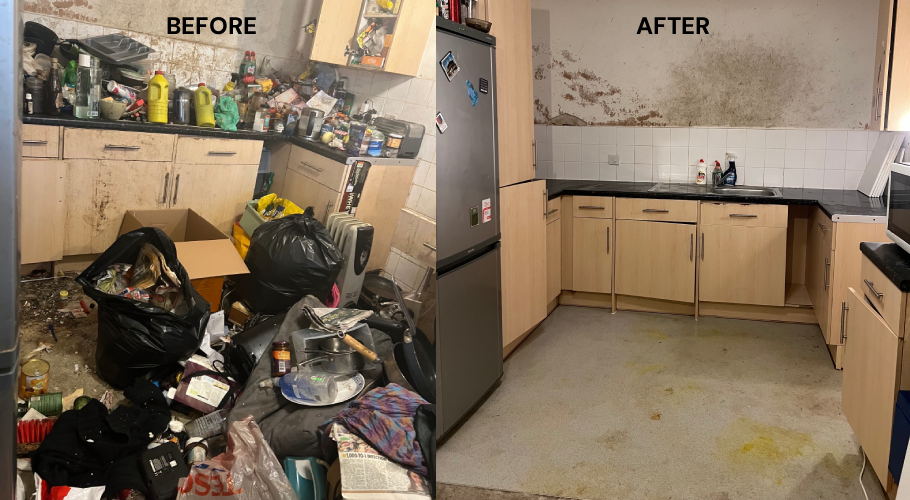
A hoarder cleaning assessment is the first step towards creating a safe, realistic and respectful plan for clearing and cleaning a property. It allows the cleaning company to understand the condition of the home, identify potential risks and discuss what the resident or authorised client wants to achieve.
The assessment is not an opportunity for someone to enter the property and decide what should be thrown away. No clearance should begin without an agreed scope of work and clear instructions about possessions that must be retained.
For residents, relatives, landlords and support professionals, knowing what happens during the assessment can make the process feel more manageable. This guide explains how a professional assessment works, what the team needs to examine and what should happen before any cleaning begins.
What Is a Hoarder Cleaning Assessment?
A hoarder cleaning assessment is a structured review of the property and the work required to restore it to an agreed condition.
It may begin with a confidential telephone conversation, photographs or a video call. In more complex cases, an in-person visit will usually be required before an accurate quotation and cleaning plan can be prepared.
The assessment helps establish:
- Which rooms and areas are affected
- How much clutter or waste is present
- Whether access routes are safe
- Which possessions must be protected
- Whether biological or chemical hazards are present
- What cleaning, equipment and waste arrangements are needed
- How many team members may be required
- Whether the work should be completed at once or in stages
- How long the project is likely to take
A hoarder cleaning assessment is different from the cleaning itself. The assessor normally records the condition of the property, discusses the client’s priorities and prepares recommendations. Items should not be removed during the visit unless this has been specifically requested and agreed.
Why Is an Assessment Necessary?
Hoarded properties vary significantly. One home may contain a large amount of paper, clothing and household belongings but remain reasonably hygienic. Another may contain spoiled food, animal waste, needles, mould, pests or other contamination.
The same cleaning plan cannot be used for both properties.
Providing a fixed quotation without understanding the condition of the home can result in inaccurate pricing, delays and unexpected additions. It can also mean that the cleaning team arrives without the right equipment or waste arrangements.
A proper assessment allows the company to prepare for the actual circumstances. It also gives the resident or client an opportunity to explain concerns, establish boundaries and ask questions before committing to the work.
What Happens Before the Property Visit?
The process normally starts with an initial conversation. This may be with the resident, a relative, landlord, housing officer, social worker, solicitor or another authorised representative.
The cleaning company will usually ask for basic information, including:
- The property address and postcode
- The type and approximate size of the property
- The number of affected rooms
- Whether the property is occupied
- Whether children, vulnerable adults or pets live there
- How long the situation has been developing
- Whether there are known hygiene or safety concerns
- Whether waste and unwanted furniture need to be removed
- The reason the clearance is being arranged
- Any deadline that must be met
- Who can approve the work
The person making the enquiry should share as much information as they reasonably can. There is no benefit in minimising the condition of the property. Accurate information allows the cleaning company to prepare safely and avoid surprises during the visit.
The initial conversation should remain respectful and practical. Hoarding can be connected with mental health difficulties, physical illness, bereavement, trauma, reduced mobility or other difficult circumstances. The purpose is to understand the required work, not to judge how the situation developed.
Can Photographs Be Used for an Initial Estimate?
Photographs and videos can be helpful when arranging an initial estimate. They can show how much of each room is accessible, the approximate volume of possessions and whether large furniture or waste is present.
Useful photographs may include:
- The entrance and access route
- Each affected room from the doorway
- Hallways, stairs and landings
- The kitchen and bathroom
- Large quantities of waste
- Gardens, garages and sheds included in the work
Clients should not place themselves at risk to take photographs. They should not climb over unstable piles, handle needles, move contaminated materials or enter rooms that appear unsafe.
Images may support an early estimate, but they do not always reveal mould behind possessions, damaged flooring, pest activity or contamination beneath the visible items. An in-person hoarder property assessment may still be required before the final quote is confirmed.
Who Should Attend the Assessment?
The appropriate person depends on who occupies the property and who is authorising the work.
The resident should be involved whenever it is safe and appropriate. Their involvement helps the cleaning company understand which belongings are important and what outcome they are comfortable with.
Other attendees may include:
- A relative or trusted friend
- A landlord or property manager
- A housing association representative
- A social worker
- A mental health or community support worker
- A hospital discharge coordinator
- A probate representative or solicitor
- An attorney acting under a valid power of attorney
It is important to establish who has the legal or practical authority to make decisions. A cleaning company should not accept instructions to remove someone’s possessions simply because another person considers them unnecessary.
Where the resident finds the process overwhelming, an agreed representative can help communicate their priorities. The resident’s dignity, privacy and rights should remain central to the plan.
What Does the Assessor Examine?
The assessor will usually walk through the areas included in the proposed work. They will record the condition of each space and identify factors that affect safety, cleaning and waste removal.
Access and escape routes
The assessor will check whether doors, corridors, stairs and fire exits can be used safely. Narrow pathways, unstable piles and blocked exits may need to be addressed before other work can begin.
Access outside the property also matters. The team may need to consider parking, communal entrances, lifts, loading restrictions and the distance between the property and a waste vehicle.
Amount and type of material
The assessment will estimate the amount of material that needs sorting or removing.
This may include:
- Paper and cardboard
- Clothing and textiles
- Food packaging
- Furniture
- Appliances
- General household waste
- Recyclable materials
- Garden waste
- Damaged belongings
- Items intended for donation
Different materials require different handling and disposal arrangements. Electrical appliances, chemicals, paint, batteries and hazardous waste should not be treated as ordinary household rubbish.
Essential rooms and facilities
The assessor will examine whether the kitchen, bathroom, bedroom and living areas can still be used for their intended purpose.
Where the property is occupied, the first priority may be restoring access to essential facilities rather than clearing the entire home immediately. This is particularly important when the work supports a vulnerable resident or prepares the property for someone returning from hospital.
Property condition
Clutter can conceal damage that is not immediately visible. The assessor will look for signs such as:
- Damaged or uneven flooring
- Water leaks
- Damp or mould
- Broken windows or doors
- Damaged fixtures
- Unsafe electrical items
- Pest activity
- Signs of structural deterioration
A cleaning company can report visible concerns, but it is not a replacement for a qualified electrician, surveyor, pest controller or structural specialist. If a serious issue is identified, further professional advice may be needed.
How Are Health and Safety Risks Assessed?
A hoarder house cleaning assessment should identify anything that could harm the resident, visitors or cleaning team.
Potential risks include:
- Blocked exits
- Unstable piles of possessions
- Broken glass
- Needles or sharps
- Human or animal waste
- Spoiled food
- Bodily fluids
- Rodent or bird droppings
- Mould
- Pest infestations
- Hazardous chemicals
- Heavy lifting
- Poor ventilation
- Fire loading
- Contaminated soft furnishings
The findings help determine what personal protective equipment, tools and cleaning products will be required. They also influence how areas are isolated and how waste is packaged and removed.
Where biological contamination is present, ordinary domestic cleaning may not be suitable. The project may require specialist biohazard cleaning alongside the clearance and deep clean.
A risk assessment does not mean the cleaning company is judging the resident or declaring the property beyond recovery. Its purpose is to organise the work safely.
How Are Personal and Sentimental Items Handled?
Concern about losing possessions is one of the main reasons people delay asking for help. A professional assessment should therefore include a detailed discussion about what must be protected.
Priority items may include:
- Identity documents
- Financial records
- Tenancy or property documents
- Medication
- Keys
- Jewellery
- Photographs
- Letters
- Family keepsakes
- Collectables
- Mobility aids
- Essential clothing
- Items belonging to another person
The resident or authorised client should explain which belongings must never be removed. These instructions can be recorded in the project plan and communicated to the cleaning team.
Depending on the circumstances, belongings may be divided into agreed categories:
- Keep in the property
- Store securely for later review
- Donate where appropriate
- Recycle
- Dispose of with permission
- Treat as contaminated waste where safe recovery is not possible
Items should not be placed into donation or disposal categories without proper agreement. The assessment should also establish what happens if the team finds money, documents, photographs or other potentially valuable possessions during the work.
Will the Cleaning Company Decide What Gets Thrown Away?
A responsible cleaning company should not make personal decisions about which possessions matter.
The resident, property owner or legally authorised representative should set the instructions. The team can explain whether an item is damaged, contaminated or difficult to clean, but the final decision should remain with the authorised person wherever possible.
There may be situations where an item presents an immediate risk and cannot be handled as an ordinary possession. For example, contaminated food, clinical waste or a used needle may require controlled removal. These possibilities should be explained during the assessment and included in the agreed scope.
Vamoose’s approach to professional hoarder cleaning services is based on working with the client, respecting their instructions and avoiding a judgemental approach.
How Is the Scope of Work Created?
Once the property has been reviewed, the assessor can divide the project into specific tasks.
A complete scope may include:
1. Making access safe
The team may first create safe routes to doors, stairs, kitchens, bathrooms and utility controls.
2. Sorting possessions
Items are reviewed according to the categories agreed with the resident or client. Important possessions are placed somewhere safe.
3. Removing unwanted material
Approved waste, damaged furniture and other unwanted items are removed using the agreed arrangements.
4. Managing hazardous materials
Needles, biological contamination, animal waste or other hazardous materials require suitable handling and disposal.
5. Deep cleaning
Once surfaces are accessible, the team can remove built-up dirt, grease, dust and residue.
6. Sanitising affected areas
Appropriate products and methods may be used where hygiene risks are present.
7. Treating odours
Odour treatment may be considered after the source has been removed. Masking an odour without addressing its source does not provide a lasting result.
8. Conducting a final review
The completed areas should be checked against the agreed scope. Any remaining limitations or property defects can then be reported.
Properties with extensive dirt, waste or contamination may also require extreme cleaning for neglected or unsafe conditions.
Can Hoarder Clearance Be Completed in Stages?
Yes, some hoarder clearance projects can be divided into manageable stages.
A phased approach may be appropriate where:
- The resident needs time to make decisions
- Only certain rooms are immediately required
- The property must remain occupied
- A support worker is coordinating the process
- The available budget requires work to be prioritised
- The volume of possessions is substantial
- The resident finds a full clearance emotionally difficult
The first phase might restore a safe route through the property and make the bathroom, kitchen and sleeping area usable. Later phases can address storage rooms, lofts, garages or less urgent areas.
However, phased work is not suitable in every case. Immediate action may be needed if exits are blocked, utilities cannot be reached or serious contamination presents a health risk.
The assessment should distinguish between work that can wait and conditions that require urgent attention.
What Determines the Hoarder Cleaning Quote?
A hoarder cleaning quote should reflect the actual scope, not simply the number of bedrooms.
Important pricing factors include:
- Size of the property
- Number of affected rooms
- Amount of material to sort
- Volume of waste
- Type of waste
- Level of contamination
- Number of cleaners required
- Estimated working hours or days
- PPE and specialist equipment
- Cleaning and sanitising requirements
- Large or heavy items
- Access, parking and loading restrictions
- Waste transport and disposal
- Urgency of the work
- Additional services requested
A lightly cluttered flat requiring sorting and a deep clean will not involve the same resources as a multi-storey house containing extensive waste and biological contamination.
This is why a responsible company may be unable to give a firm price from a short telephone description alone. An assessment helps prevent unclear quotations and unexpected changes.
What Should the Written Quotation Include?
The quotation should clearly describe what the cleaning company has agreed to do.
It should ideally cover:
- Rooms and areas included
- Sorting responsibilities
- Clearance tasks
- Deep-cleaning tasks
- Sanitisation or biohazard treatment
- Waste-removal arrangements
- Items or services excluded
- Expected team size
- Estimated duration
- Price and payment terms
- Proposed start date
- Treatment of unexpected hazards
- Client responsibilities
- Arrangements for keys and access
Clients should ask questions if any part of the quotation is unclear. For example, “clearance” may not automatically include deep cleaning, carpet treatment, appliance removal or garden waste.
The scope should be detailed enough for both sides to understand what a completed job will look like.
How Should You Prepare for the Assessment?
You do not need to clean the property before the assessor arrives. Doing so could expose you to hidden hazards or cause unnecessary distress.
Instead, focus on gathering useful information.
Make a list of priorities
Identify the rooms that matter most and the result you need. This may be restoring safe access, preparing for a tenancy inspection or making the home suitable for a resident’s return.
Identify important possessions
Prepare a list of documents, photographs, valuables and sentimental items that must be retained. If possible, explain where they may be located.
Share known risks
Tell the assessor about pets, pests, needles, waste, mould, damaged floors, utilities and any rooms that may be unsafe.
Confirm who can make decisions
If the resident will not attend, make sure the person meeting the assessor has permission to discuss and approve the proposed work.
Prepare access information
Explain parking restrictions, entry arrangements, keys, building management requirements and any limitations on working hours.
Do not move unstable piles, touch needles or handle unidentified waste to make the property appear easier to assess. The cleaning company needs to understand its genuine condition.
What Happens After the Assessment?
After the visit, the cleaning company should review its findings and prepare a recommended plan.
The next steps normally include:
- Providing the written quotation
- Answering the client’s questions
- Confirming items and areas that must be protected
- Agreeing the scope and payment arrangements
- Setting a date
- Coordinating access
- Sharing relevant instructions with the cleaning team
- Communicating with support professionals where authorised
No work should begin until the client understands and accepts the plan.
If hidden damage or contamination is discovered after possessions are moved, the team should explain the issue before completing work outside the agreed scope. The quotation should state how such changes will be handled.
Questions to Ask at a Hoarder Cleaning Assessment
The assessment is also an opportunity to check whether the company is suitable.
Consider asking:
- Are your services fully insured?
- Who will supervise the project?
- How will personal belongings be protected?
- Will anything be removed without approval?
- Can the work be completed in phases?
- How will waste be handled?
- What happens if needles or contamination are discovered?
- Are clearance and deep cleaning both included?
- Will the same team complete the whole project?
- How will you protect communal areas?
- What documentation will I receive?
- What could change the quoted price?
- Who should I contact during the work?
Clear answers can help prevent misunderstandings and give everyone involved greater confidence in the plan.
Arranging a Hoarder Cleaning Assessment in London
A hoarder cleaning assessment should provide clarity without placing pressure on the resident. The aim is to understand the property, agree what must be protected and develop a safe plan that reflects the client’s circumstances.
Vamoose Cleaning Services works with homeowners, relatives, landlords, housing providers and support organisations across London and surrounding counties. Its approach combines clearance, deep cleaning and sanitisation with compassionate and non-judgemental communication.
If you need help assessing a cluttered, neglected or potentially hazardous property, you can speak confidentially with the Vamoose team about the circumstances. You can also request a property assessment and quotation online.
Frequently Asked Questions
Is a hoarder cleaning assessment confidential?
A professional cleaning company should handle the enquiry and property information discreetly. Ask how photographs, access details and personal information will be stored and shared.
Does the resident need to attend?
Not always. A relative, landlord, support worker or authorised representative may attend, but the cleaning company must understand who has authority to approve removal and cleaning decisions.
Can I receive a quote from photographs?
Photographs or video may support an initial estimate. An in-person visit may still be required where the scale of the work, access arrangements or potential hazards cannot be confirmed remotely.
Will anything be removed during the assessment?
Normally, the assessment is used to inspect the property and prepare a plan. Items should not be removed unless this has been specifically requested, authorised and agreed in advance.
Is the assessment the same as a risk assessment?
They are connected but not identical. The overall assessment considers the property, client requirements and proposed work, while the risk assessment focuses specifically on hazards and the controls needed to complete the work safely.
Can a social worker or housing officer arrange the assessment?
Yes, a professional representative can make the initial enquiry and coordinate access. The cleaning company will still need to confirm authority, consent and who can approve the final scope.
What if the property contains biohazards?
Tell the cleaning company before the visit if you know about needles, bodily fluids, animal waste or other contamination. This allows the assessor to take appropriate precautions and determine whether specialist treatment is required.
How long does a hoarder cleaning assessment take?
The time depends on the property’s size, accessibility and condition. A small property may be assessed relatively quickly, while a large or heavily affected home will require a more detailed inspection and discussion.