
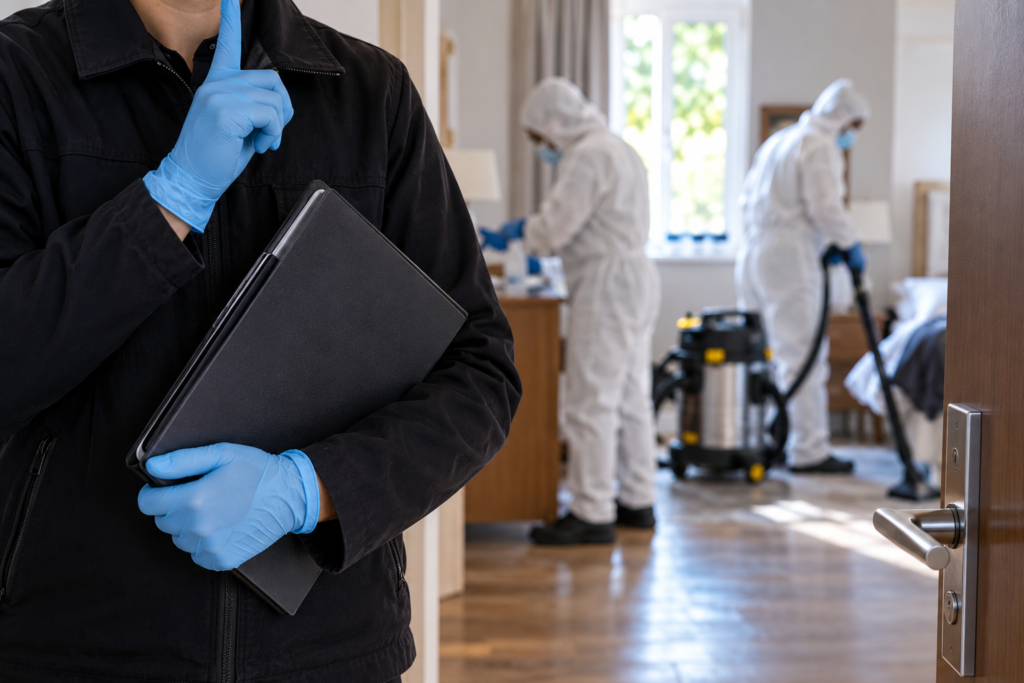
Arranging professional cleaning is usually a straightforward task. However, when a property has been affected by bereavement, hoarding, severe neglect, contamination or a distressing incident, the situation can be much more personal.
Homeowners, families, landlords and property managers may need professional help while dealing with difficult circumstances. They may be worried about neighbours asking questions, personal belongings being seen, sensitive information being shared or the property’s condition becoming a subject of gossip.
In these situations, cleaning is not simply about restoring a property. It is also about protecting privacy, respecting the people involved and ensuring that the work is carried out with care.
This is why confidentiality matters when arranging cleaning for a sensitive property. A professional specialist cleaning company should understand that every property has a story behind it and that clients deserve to be treated with dignity, not judgement.
At Vamoose Cleaning Services, specialist cleaning services include support for properties requiring trauma cleaning, biohazard cleaning, hoarding clearance and other forms of intensive cleaning. These situations can require a particularly considerate approach, alongside appropriate safety procedures.
This guide explains what confidentiality means in specialist cleaning, why it matters and how to protect your privacy when arranging a service.
What Is Sensitive Property Cleaning?
Sensitive property cleaning refers to cleaning work where the circumstances, condition or history of a property require additional discretion and care.
Unlike routine domestic cleaning, these projects may involve private family circumstances, vulnerable occupants, hazardous contamination or large amounts of personal belongings.
Examples include:
- Bereavement and trauma: Cleaning after a distressing incident or an unattended death.
- Hoarding: Helping restore a property where belongings have accumulated and rooms may be difficult to access.
- Severe neglect: Cleaning a property that has gone without adequate maintenance for an extended period.
- Biohazard contamination: Dealing with bodily fluids or other potentially hazardous materials that require specialist handling.
- Tenancy and property transitions: Preparing a property for its next use when its condition or history requires discretion.
- Vulnerable occupants: Supporting a person whose circumstances make privacy, dignity and respectful communication particularly important.
These situations are not necessarily the result of carelessness. Bereavement, illness, disability, financial difficulties and unexpected life changes can all affect someone’s ability to maintain a property.
A professional cleaning team should focus on the practical work required, not make assumptions about the people involved.
Why Does Confidentiality Matter in Specialist Cleaning?
Confidentiality protects more than the condition of a property. It helps protect the people connected to it.
1. It Protects Personal Privacy
A property may reveal information about someone’s health, family circumstances, finances or personal life. Photographs, documents, possessions and conversations can all contain information that the owner would prefer to keep private.
For example, a family arranging cleaning after a bereavement may not want relatives, neighbours or unrelated people to know the details of what happened.
Similarly, a landlord dealing with a severely neglected rental property may need the issue resolved without unnecessary attention being drawn to the former occupant.
A discreet cleaning provider should collect only the information needed to assess and complete the work. Details about a client’s circumstances should not become a topic of casual conversation or unnecessary disclosure.
2. It Preserves Dignity and Respect
People dealing with difficult property conditions may already feel embarrassed, anxious or overwhelmed.
A judgemental attitude can make the situation harder. Clients may hesitate to ask for help if they believe their circumstances will be criticised or discussed with others.
Professional cleaners should approach each situation with respect. Their role is to understand the cleaning requirements, identify relevant risks and help restore a safe and usable environment.
For instance, a person living in a property affected by hoarding may have strong emotional attachments to their possessions. A respectful team should follow agreed instructions about sorting, retaining and removing items rather than treating everything as rubbish.
Confidentiality and dignity work together. Protecting someone’s privacy while treating their circumstances sensitively can make it easier for them to accept the support they need.
3. It Reduces Unnecessary Attention From Neighbours
In flats, shared buildings and residential streets, cleaning activity may be visible to other people.
Neighbours might notice equipment being carried into a property, waste being removed or workers entering and leaving. This does not mean that anyone needs to explain private circumstances to them.
A discreet service considers how the work can be organised without attracting unnecessary attention, while still meeting health, safety and access requirements.
Depending on the property and the job, practical arrangements may include coordinating arrival times, planning equipment movements and limiting conversations in shared spaces.
However, discretion should never mean ignoring safety rules or concealing information that must legally be shared. The aim is to avoid unnecessary exposure, not to bypass legitimate requirements.
4. It Helps Families During Difficult Circumstances
Families arranging specialist cleaning may already be managing several responsibilities at once.
Following a death, for example, relatives may be dealing with funeral arrangements, paperwork, property decisions and emotional stress. A property affected by severe neglect or contamination can add another demanding task.
They need clear information about what will happen, what the cleaning team requires from them and which decisions remain theirs to make.
A confidential service can help by providing a private point of contact, explaining the process calmly and avoiding unnecessary requests for personal details.
This allows families to concentrate on important decisions without feeling that they must repeatedly explain a difficult situation.
5. It Supports Professional Relationships
Sensitive property cleaning is not arranged only by homeowners or families. Landlords, letting agents, housing associations, social care professionals and property managers may also need specialist support.
These professionals often handle information about residents, tenants or clients that should not be shared unnecessarily.
A cleaning company should understand who is authorised to give instructions, which information is necessary for the job and how updates should be communicated.
Clear boundaries help everyone involved work together while respecting the privacy of the people connected to the property.
What Does Confidentiality Look Like in Practice?
Confidentiality should be reflected in the way a cleaning company communicates, plans and completes a project. A general promise of discretion is useful, but clients should also understand what practical steps will be taken.
Discreet Communication
Initial conversations should take place through appropriate communication channels. A provider should avoid discussing sensitive details with people who have no legitimate reason to know them.
Before sharing information, clients can agree on the preferred contact method and identify who should receive updates.
For example, a property manager might want all communication sent to a designated work email rather than a shared office inbox.
Careful Handling of Photographs
Photographs may be useful for assessing the condition of a property, planning the work or recording its completion. However, images can also expose personal information.
Before photographs are taken, ask why they are required, who will be able to access them, how they will be stored and whether they will be shared with anyone else.
Images should be limited to legitimate purposes. A provider should not use photographs of a sensitive property for marketing or public posts without appropriate permission.
Where an image includes documents, family photographs or other identifying details, those details should be protected whenever possible.
Respectful Handling of Personal Belongings
Sensitive properties may contain passports, financial documents, medical records, letters, photographs, medication and sentimental possessions.
These items should not automatically be treated as waste simply because they are found in a property requiring intensive cleaning.
Before work begins, agree on how personal belongings will be handled. Identify anything that must be kept, left untouched or passed to an authorised person.
If unexpected documents or valuable items are discovered, the team should follow the agreed procedure rather than making assumptions about what the owner wants.
This is particularly important in hoarding and bereavement related projects, where belongings may have considerable emotional or practical value.
Clear Instructions About Who Can Receive Updates
Not everyone involved in a property project needs access to every detail.
A family member may arrange the cleaning, while a landlord or property manager approves access. In other cases, a support worker may coordinate the service on behalf of a client.
The cleaning provider should establish who is authorised to make decisions and receive updates. If authority is unclear, it should be clarified before personal information is shared or items are removed.
This avoids misunderstandings and reduces the risk of sensitive information being disclosed to the wrong person.
Appropriate Waste Handling
Specialist cleaning may involve removing rubbish, contaminated materials or unwanted possessions. Waste must be handled safely and disposed of through appropriate routes.
Confidentiality also matters when waste contains letters, paperwork or other personal information. Ask how such materials will be handled and whether they need to be separated from general waste.
Vamoose states that it is registered as a waste carrier and follows appropriate procedures for waste handling. You can learn more about its approach through the Vamoose FAQs.
For wider information about waste carrier registration in England, visit the official GOV.UK waste carrier registration guidance.
Which Types of Cleaning Require Particular Discretion?
Confidentiality is valuable in all professional cleaning services, but some situations make it especially important.
Trauma and Bereavement Cleaning
Cleaning after a distressing incident can involve sensitive personal circumstances and potentially hazardous contamination.
Families may not want to discuss the incident in detail, and they should not be expected to provide unnecessary personal information. The provider needs enough relevant information to assess the work safely, but communication should remain respectful and focused on practical requirements.
A specialist team should explain what can be cleaned, whether decontamination is required and what steps will follow.
Learn more about Vamoose trauma cleaning services.
Hoarding and Extreme Cleaning
Properties affected by hoarding can contain a mixture of everyday possessions, important documents, waste and items with significant sentimental value.
The cleaning process may require careful sorting, clearance, deep cleaning and sanitation. Removing belongings without clear instructions can create distress and undermine trust.
A suitable plan should identify what can be removed, what must be retained and how decisions will be made if unexpected items are found.
Privacy also matters because people experiencing hoarding related difficulties may fear criticism or unwanted attention.
Explore Vamoose hoarders cleaning services for more information about specialist support.
Biohazard Cleaning
Biohazard cleaning may involve bodily fluids, contaminated surfaces or materials that require specific protective equipment and safe working procedures.
In these situations, confidentiality must work alongside safety. The cleaning team needs accurate information about relevant hazards to plan the job correctly, but that information should not be shared more widely than necessary.
Clients should ask how the company assesses risks, controls access to affected areas and manages any waste produced during the work.
See Vamoose biohazard cleaning services for details.
Neglected or Vacant Properties
A property that has been vacant or neglected for a long time may require extensive cleaning, clearance and sanitation.
Landlords, estate agents and property managers may need to coordinate access with several people. It is helpful to agree on a single contact and a clear process for approving decisions.
The cleaning team should receive the information necessary to complete the work, while private details about former occupants should remain restricted to those who need them.
How to Choose a Confidential Specialist Cleaning Company
Before booking, look beyond general statements such as “professional service” or “complete discretion”. Ask specific questions about how privacy will be respected during the project.
Ask How Your Information Will Be Used
Find out what information the company needs, why it needs it and who may have access to it.
A provider should be able to explain its approach in straightforward language. Be cautious if the company asks for extensive personal details without explaining their relevance.
Confirm How Staff Handle Sensitive Situations
Ask whether the team has experience with the type of property and circumstances involved.
Staff should understand the importance of respectful communication, following instructions and avoiding judgemental comments. Relevant training and supervision also matter, particularly where the work involves hazardous materials.
Discuss Photography and Records
Ask whether photographs are required and how they will be used.
If photographs are needed for assessment or reporting, agree on the purpose and who will receive them. Also ask how project records and other personal information are protected.
Agree on the Scope of the Work
Request a clear explanation of which areas will be cleaned, which items may be moved and what will happen to waste or unwanted belongings.
This is especially important if the property contains sensitive documents or items that must not be removed.
Establish a Communication Plan
Agree on the main contact person, the preferred way to receive updates and how the company will handle unexpected discoveries or additional work.
A clear communication plan can prevent confusion and reduce unnecessary disclosure.
Check Insurance and Safety Procedures
Confidentiality is essential, but it cannot replace competence and safety.
Ask about relevant insurance, risk assessments, protective equipment and procedures for handling contamination. The company should be able to explain how it will manage the practical risks associated with your property.
For further guidance, read what to look for in specialist cleaning company insurance, DBS checks and accreditations.
Confidentiality Checklist Before Booking
Use this checklist when speaking to a specialist cleaning provider.
- The company explains how it protects client privacy.
- I know what information the team needs and why.
- A main contact person has been agreed.
- The company has explained whether photographs will be taken.
- Personal belongings and important documents will be handled according to clear instructions.
- The scope of cleaning and any clearance work is understood.
- I know who can approve the removal of items.
- The company has explained relevant safety procedures.
- The quotation and any possible additional costs are clear.
- I understand how updates and project records will be handled.
You do not need to disclose every personal detail to arrange help. However, you should provide enough relevant information for the company to understand the property, assess risks and recommend an appropriate service.
Common Mistakes to Avoid When Arranging Sensitive Cleaning
Assuming Every Cleaning Company Offers the Same Level of Discretion
A company that provides routine domestic cleaning may not have the experience or procedures needed for trauma, biohazard or extreme cleaning projects.
Check that the provider can handle the specific requirements of your property rather than relying on general cleaning experience alone.
Sharing More Personal Information Than Necessary
It can be helpful to explain the circumstances, but you do not need to tell every detail of a personal event.
Start by describing the condition of the property, the affected areas, any known hazards and the outcome you need. The provider can then ask relevant questions.
Leaving Instructions About Belongings Until the Day of Cleaning
If important items must be retained, communicate this before work begins.
Where possible, identify documents, valuables, sentimental possessions and areas that should not be disturbed. This reduces the risk of misunderstandings during clearance or deep cleaning.
Forgetting to Discuss Photographs
If images are needed for assessment or project records, establish the purpose before work begins. Do not assume that photographs will remain private without asking how they are handled.
Choosing Only on Price
A low quotation may appear attractive, but it does not tell you whether the provider has suitable experience, equipment, insurance or procedures.
Compare the proposed work, safety arrangements, communication and confidentiality practices alongside the price.
How Vamoose Cleaning Services Approaches Sensitive Property Cleaning
Vamoose Cleaning Services provides specialist cleaning for situations where ordinary domestic cleaning may not be sufficient. Its services include trauma cleaning, biohazard cleaning, hoarders cleaning and other forms of deep or intensive property cleaning.
The company states that it treats sensitive enquiries with discretion and respect, and that its team uses appropriate procedures for specialist cleaning work.
When arranging a service, clients can explain the property’s condition, identify any urgent concerns and discuss the outcome they need. The next steps may include an assessment, a tailored cleaning plan and a quotation based on the work required.
Every property is different, so it is sensible to confirm the precise scope, access arrangements, privacy expectations and handling of belongings before work starts.
To learn more, visit the Vamoose Cleaning Services website, explore its specialist cleaning services or view its Google Business Profile.
Frequently Asked Questions
Why is confidentiality important when arranging specialist cleaning?
Confidentiality helps protect personal information, family circumstances, property details and sensitive belongings. It also helps clients feel comfortable seeking professional support during difficult situations.
Can I arrange specialist cleaning without explaining every personal detail?
Yes. You should provide the information needed to assess the property, understand relevant hazards and plan the work. You can ask why additional details are necessary before sharing them.
Will a specialist cleaning team take photographs of my property?
This depends on the project and the provider’s procedures. Ask whether photographs are necessary, what they will be used for and who can access them before work begins.
How can I protect personal belongings during a sensitive property clean?
Identify important documents, valuables and sentimental possessions before work starts. Give the cleaning team clear instructions about what should be retained, left untouched or removed, and agree on how unexpected items will be handled.
Do landlords and property managers need to consider confidentiality?
Yes. They should share only the information necessary for the work and establish who is authorised to approve access, receive updates and make decisions about belongings or waste.
Is confidential cleaning the same as keeping every detail secret?
No. Confidentiality means handling information responsibly and avoiding unnecessary disclosure. Relevant information may still need to be shared with authorised people or where required for safety or legal reasons.
Does confidentiality matter during biohazard cleaning?
Yes. The provider should protect the client’s privacy while also following appropriate risk assessment, protective equipment, decontamination and waste handling procedures.
How do I arrange a confidential cleaning assessment with Vamoose?
You can contact Vamoose Cleaning Services to discuss your property and the type of help required. The company lists its telephone number as 01895 717 115 and its email address as info@vamoosecs.co.uk. You can also visit its website to request an estimate.
Final Thoughts
Arranging cleaning for a sensitive property can be difficult, particularly when the situation involves bereavement, hoarding, contamination or severe neglect. The right support should make the process more manageable, not add to the pressure.
Confidentiality helps protect privacy, preserve dignity and build trust between the client and the cleaning team. It also encourages clearer communication about personal belongings, access arrangements, photographs, safety procedures and the work that needs to be completed.
Before booking, ask how your information will be handled, agree on clear instructions and make sure the company understands both the practical requirements and the sensitivity of the situation.
If you need specialist cleaning support, contact Vamoose Cleaning Services for a confidential discussion about your property and the most appropriate next steps.