What Does a Professional Deep Clean Actually Include? A Complete Guide for London Homeowners
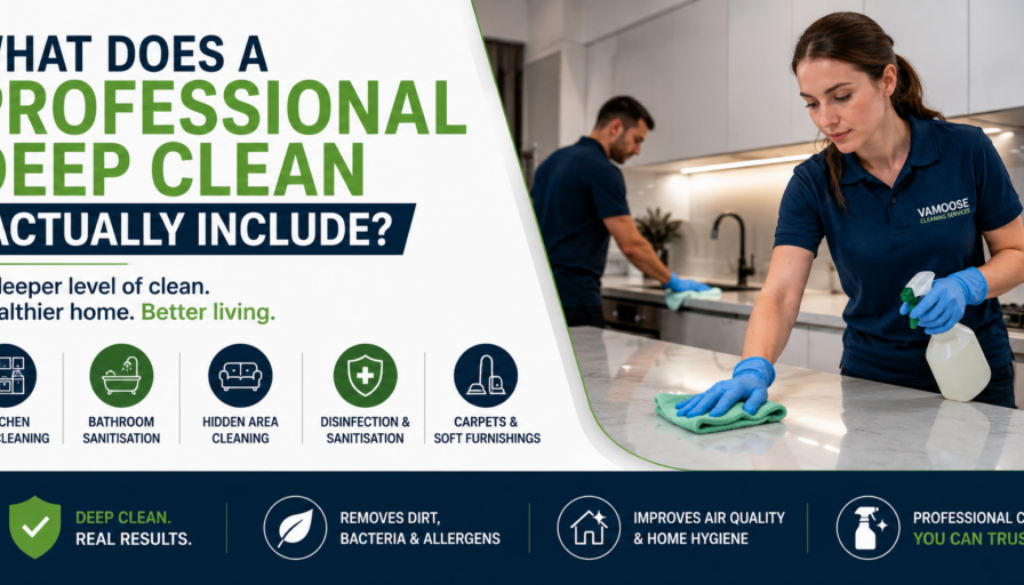
Many homeowners assume deep cleaning simply means spending extra time cleaning visible dirt and surfaces. In reality, a professional deep clean is far more detailed and focuses on areas of the property that regular weekly cleaning often misses completely.
Over time, dust, bacteria, grease, allergens, limescale, and hidden grime build up throughout the home, especially in busy London properties where pollution, compact living spaces, and high occupancy levels increase cleaning demands.
Professional deep cleaning services are designed to restore hygiene, improve indoor air quality, and remove hidden contamination that ordinary household cleaning usually cannot fully address.
Companies such as Vamoose Cleaning Services provide specialist deep cleaning services across London for homeowners, tenants, landlords, and property managers looking to restore properties to a much higher standard of cleanliness.
What Is a Professional Deep Clean?
A professional deep clean is a detailed cleaning process that targets areas of the property beyond routine day-to-day cleaning.
Unlike regular cleaning, deep cleaning focuses on:
-
Hidden dirt and dust buildup
-
Grease and limescale accumulation
-
High-touch surface sanitisation
-
Bacteria and allergen removal
-
Areas behind appliances and furniture
The goal is not only improving appearance but also restoring hygiene standards throughout the home.
According to cleaning industry guidance, deep cleaning helps remove contaminants and bacteria that standard surface cleaning often leaves behind. Healthline guide to deep cleaning benefits
Why London Homes Often Need Deep Cleaning More Frequently
London homes face unique cleaning challenges compared to many other parts of the UK.
Properties are often affected by:
Busy lifestyles also mean many homeowners simply do not have time to clean hidden areas regularly.
Because of this, professional deep cleaning services in London are becoming increasingly common across flats, family homes, and rental properties.
What Areas Are Usually Included in a Deep Clean?
Professional deep cleaning usually covers nearly every area of the home in far greater detail than ordinary cleaning.
This commonly includes:
Kitchens
Kitchens are often one of the most heavily cleaned areas because grease, bacteria, and food residue build up quickly.
Typical kitchen deep cleaning may include:
-
Degreasing surfaces and splashbacks
-
Cleaning behind appliances
-
Sanitising cupboards and handles
-
Deep cleaning sinks and taps
-
Removing limescale and stains
Bathrooms
Bathrooms are highly prone to bacteria, mould, soap scum, and limescale buildup.
Professional cleaning teams often focus on:
-
Shower descaling
-
Tile and grout cleaning
-
Toilet sanitisation
-
Mould and mildew removal
-
Mirror and glass polishing
Hard water is especially common in London, which makes regular deep bathroom cleaning important for long-term maintenance.
According to housing and hygiene guidance, damp and poor bathroom hygiene can contribute to mould growth and indoor air quality problems. NHS guidance on mould and damp
Hidden Areas Most Homeowners Miss
One major difference between standard cleaning and professional deep cleaning is attention to hidden or neglected areas.
Professional cleaners often target:
-
Behind furniture
-
Skirting boards
-
Door frames
-
Window tracks
-
Under appliances
-
Ventilation areas
These locations frequently collect dust, bacteria, and allergens that remain untouched during normal weekly cleaning routines.
Professional deep cleaning services focus on restoring cleanliness throughout the entire property rather than simply improving visible surfaces.
Sanitisation and Disinfection
Modern deep cleaning services also place strong emphasis on hygiene and sanitisation.
This often includes disinfecting:
-
High-touch surfaces
-
Handles and switches
-
Bathrooms and toilets
-
Kitchen preparation areas
Professional cleaning companies frequently use specialist products designed to reduce bacteria and improve hygiene standards throughout the home.
In some situations, homeowners may also require specialist disinfecting cleaning services in London for enhanced sanitation after illness, contamination, or long-term neglect.
Carpet, Upholstery, and Soft Furnishings
Soft furnishings often trap dust, allergens, pet hair, and odours over time.
Deep cleaning may include attention to:
According to indoor air quality experts, carpets and fabrics can hold significant amounts of dust and allergens if not cleaned regularly. EPA indoor air quality guidance
This is especially important for households with pets, children, or allergy sufferers.
Deep Cleaning After Renovation or Building Work
After renovation projects, ordinary cleaning is often not enough because construction dust spreads throughout the property.
Professional after builders cleaning services in London are specifically designed to remove:
-
Fine dust particles
-
Paint residue
-
Construction debris
-
Adhesive marks
-
Dust hidden inside vents and corners
This type of cleaning helps restore air quality and prepares the property for safe occupancy again.
How Long Does a Deep Clean Take?
The time required depends on:
-
Property size
-
Number of rooms
-
Level of dirt buildup
-
Presence of pets or mould
-
Additional sanitation requirements
A small flat may take several hours, while larger family homes or neglected properties may require a full day or multiple visits.
Professional cleaning teams normally assess the property beforehand to determine the level of work required.
Why Professional Deep Cleaning Is More Effective
Professional cleaning teams use specialist equipment, products, and methods that achieve much deeper results than ordinary household cleaning.
Benefits often include:
-
Better hygiene standards
-
Reduced allergens and dust
-
Improved indoor air quality
-
Removal of hidden dirt buildup
-
Fresher and healthier living spaces
This is especially valuable for:
-
Busy households
-
Landlords preparing properties
-
Allergy-sensitive occupants
-
Homes after renovation work
Professional cleaners also know how to clean efficiently without damaging surfaces or materials.
When Should Homeowners Book a Deep Clean?
Many London homeowners book deep cleaning services:
-
Every few months for maintenance
-
Before moving in or out
-
After renovations
-
Following illness or contamination
-
Before hosting guests or events
Properties with pets, children, or high daily usage often benefit from more frequent professional cleaning schedules.
Conclusion
A professional deep clean involves much more than ordinary household cleaning. It focuses on restoring hygiene, removing hidden dirt and bacteria, improving air quality, and cleaning areas that are often neglected during regular routines.
For London homeowners dealing with busy lifestyles, pollution, hard water, and high daily property use, professional deep cleaning helps maintain healthier, fresher, and more hygienic living spaces over the long term.
Whether for routine maintenance, post-renovation cleaning, or restoring heavily used properties, specialist deep cleaning services provide a far more thorough level of cleanliness than standard cleaning alone.
Frequently Asked Questions
What is included in a professional deep clean?
A deep clean usually includes kitchens, bathrooms, hidden areas, sanitisation, dust removal, and detailed surface cleaning throughout the property.
How is deep cleaning different from regular cleaning?
Deep cleaning focuses on hidden dirt, bacteria, and neglected areas that normal weekly cleaning often misses.
How often should London homes be deep cleaned?
Many London homes benefit from professional deep cleaning every 3–6 months depending on occupancy and lifestyle.
Does deep cleaning include sanitisation?
Yes. Professional deep cleaning often includes disinfecting high-touch surfaces and hygiene-sensitive areas.
Who provides professional deep cleaning services in London?
Vamoose Cleaning Services provides professional deep cleaning, disinfecting cleaning, and specialist property cleaning services across London.