
A hoarded property rarely fails on cleanliness alone. Where belongings pile up for years, animals often move in alongside them, whether that is a household pet whose care slipped as the hoarding worsened, or rodents that found an easy way into a home full of clutter, food waste, and undisturbed corners. What looks like a mess to clear out is frequently something closer to a biohazard, and the risks involved are not always obvious until someone starts moving things.
This guide explains what animal waste and rodent contamination actually involve in a hoarded home, the specific health risks each one carries, and why this kind of property needs a different approach to cleanup than a standard clearance job.
Across London, Surrey, Middlesex, Watford, and Hertfordshire, this combination turns up regularly in properties where hoarding has gone unaddressed for a long period, whether that is a family home, a housing association void, or a rental property left by a tenant whose ability to cope had quietly declined. The scale varies enormously, from a handful of mouse droppings behind a kitchen unit to a property where rodents and untreated pet waste have affected almost every room, but the underlying risks and the correct response stay largely the same.
What Animal Waste and Rodent Contamination Look Like in a Hoarded Home

Rodent contamination usually shows up as droppings scattered along skirting boards, inside cupboards, and behind stored belongings, along with urine stains, gnaw marks on furniture and cabling, and nesting material built from shredded paper, fabric, or insulation. In long term hoarding cases, this contamination can spread through an entire property rather than staying confined to one room, since rodents move freely through cluttered spaces that give them cover and access to food.
Animal waste from pets follows a similar pattern when care has broken down. Cat and dog waste can build up on carpets, flooring, and soft furnishings over months or years, often soaking through to subfloors and skirting. In more severe cases, properties may contain waste from multiple animals kept in numbers beyond what the owner could realistically manage, which compounds both the volume of contamination and the health risk involved.
Why Hoarding Conditions Attract and Worsen Infestation
Clutter does not just make a property harder to clean. It actively creates the conditions rodents need to establish themselves and go unnoticed for long periods. Piles of boxes, bags, and stored belongings give rodents cover from predators and people, along with an abundance of nesting material in the form of paper, fabric, and packaging. Food waste left in a cluttered kitchen, or pet food stored without secure containers, provides an easy and reliable food source.
The scale of the clutter also means an infestation can grow substantially before anyone notices. In a well kept home, droppings or gnaw marks are usually spotted quickly. In a hoarded property, these signs are hidden among belongings, and by the time contamination is discovered during a welfare visit, a property inspection, or a clearance, it has often had months or years to spread through the building.
This is one of the reasons hoarding cases involving animals tend to be more serious than a typical rodent problem. The infestation and the hoarding reinforce each other, with clutter sheltering the rodents and the resulting contamination adding another layer of difficulty to an already complex clearance.
Health Risks From Rodent Droppings and Urine
Rodent droppings and urine are not simply unpleasant to find. They carry a genuine risk of disease transmission, particularly once dried material is disturbed and becomes airborne.
Salmonella. Rodents commonly carry Salmonella bacteria, and contamination of surfaces or food preparation areas can cause gastrointestinal illness including vomiting, diarrhoea, and stomach cramps.
Leptospirosis. Also known as Weil’s disease, this bacterial infection spreads through contact with rat urine, particularly where it has contaminated water, damp surfaces, or soil. It can cause flu like symptoms initially, and in more serious cases can lead to kidney and liver damage.
Rat bite fever. This can be transmitted through a bite or scratch, but also through contact with contaminated droppings or urine, and typically causes fever, rash, and joint pain.
Hantavirus. This is transmitted through inhaling airborne particles from rodent droppings, urine, or saliva, most commonly when dried material is swept or vacuumed and becomes airborne. According to the UK Health Security Agency, the risk to the public in the UK is very low, and the only strain identified here does not spread between people. Even so, the same precautions that reduce hantavirus risk elsewhere, avoiding dry sweeping and using proper protective equipment, remain sensible practice for any significant rodent contamination.
Health Risks From Accumulated Pet Waste
Pet waste that has built up over an extended period carries a different but equally serious set of risks.
Ammonia exposure. Urine that has soaked into carpets, flooring, and furniture for months releases ammonia as it breaks down, which can irritate the eyes, throat, and lungs. In severely affected properties, ammonia concentrations can be high enough to cause noticeable discomfort within minutes of entering the room.
Toxoplasmosis. This parasite can be present in cat faeces and poses a particular risk to pregnant women and people with weakened immune systems, since infection can affect an unborn baby or cause serious illness in someone whose immune system cannot fight it off effectively.
Parasites and fungal infections. Fleas, mites, and ringworm can all persist in accumulated animal waste and bedding, and can transfer to people clearing the property if it is handled without the right protective clothing.
Bacterial contamination. As with rodent waste, accumulated pet waste carries bacteria including E. coli and Salmonella, particularly where it has mixed with food waste or other organic material in the property.
Structural and Property Damage Risks
Beyond the direct health risks, animal waste and rodent activity cause damage that affects the property itself. Urine that soaks into wooden flooring, subfloors, and skirting can cause lasting odour and, over time, structural weakening as the wood absorbs moisture repeatedly. Rodent gnawing on electrical cabling is a recognised fire risk, and gnaw damage to structural timber or insulation can go unnoticed for years in a cluttered property where no one is regularly inspecting the fabric of the building.
Persistent dampness from urine and animal waste also encourages mould growth, which introduces its own set of respiratory risks on top of the contamination already present. By the time a hoarded property reaches this stage, the clearance work usually needs to address structural drying and mould treatment alongside the waste removal itself, not as a separate follow up job.
Insurers and mortgage lenders take a close interest in this kind of damage too. A property that has suffered prolonged contamination and structural moisture can be harder to value accurately, and in some cases a lender or insurer will want evidence that decontamination and any necessary repairs have been carried out before releasing funds or confirming cover. Families managing a probate property, or landlords preparing a unit for reletting, should factor this into their timeline rather than assuming a quick clean will satisfy a valuation or inspection.
Why This Is a Biohazard Cleaning Job, Not a Standard Clean
Properties affected by animal waste and rodent contamination fall outside what a standard cleaning team, or a well meaning family member, should attempt without the right training and equipment. The core problem is that disturbing dried droppings and urine, through sweeping, vacuuming, or even general movement of contaminated items, releases particles into the air that would otherwise stay settled.
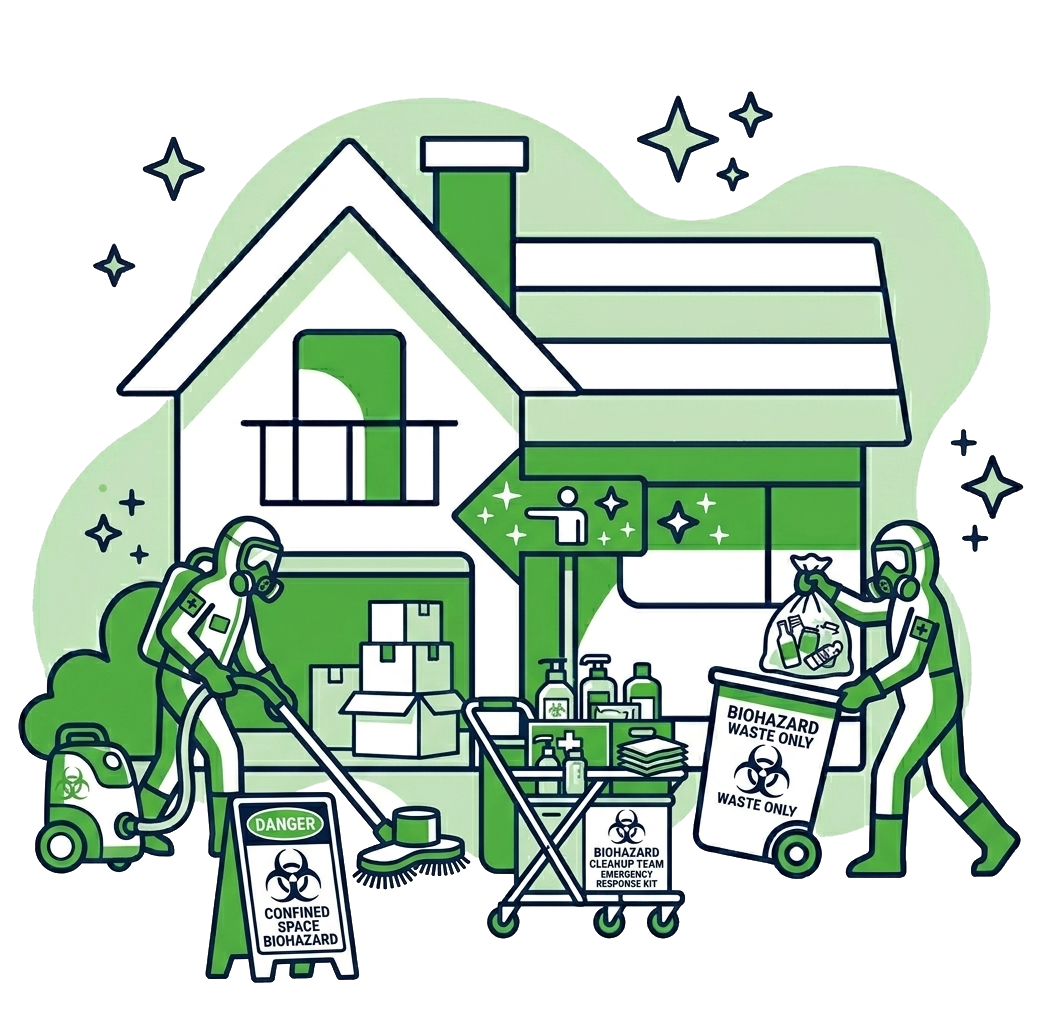
A proper biohazard cleaning approach avoids dry disturbance of contaminated material, uses appropriate personal protective equipment including respirators and gloves, and follows a structured disinfection process rather than simply wiping surfaces down. Waste is bagged and removed under licensed carrier conditions, and affected soft furnishings, flooring, or insulation that cannot be safely decontaminated are removed and disposed of rather than cleaned in place.
This is also why a hoarding case involving animal waste needs a different pace and process to a standard clearance. Belongings need to be assessed and, where possible, decontaminated or set aside before general removal begins, rather than treating the entire property as waste to be cleared as quickly as possible.
Who Encounters This Most Often
This type of contamination shows up across several groups managing residential property, not just families dealing with a relative’s home.
Families and executors dealing with a relative’s property after they have passed away or moved into care, particularly where the person lived alone for a long period and their ability to manage the home and any pets had declined.
Landlords and housing associations managing a void left by a tenant whose hoarding or animal care had gone unnoticed or unaddressed for some time. A structured hoarders clearance service is often needed alongside biohazard cleaning in these cases, since the volume of belongings and the contamination usually need to be handled together.
Social workers and support teams, who may be the first to identify a hoarding situation during a welfare visit and need to coordinate a sensitive clearance alongside ongoing support for the person involved. Our referral guide for social workers and mental health teams sets out how this kind of referral typically works in practice.
Environmental health officers, who may become involved where contamination affects neighbouring properties or poses a wider public health risk, particularly in shared buildings or blocks of flats. In these cases, a documented, professional cleanup process matters beyond the immediate property, since officers may need evidence that contamination has been properly addressed before closing a case or lifting any restrictions placed on the property.
The Safe Cleanup Process
A structured cleanup of animal waste and rodent contamination generally follows the same core steps regardless of the property’s size or the extent of the contamination.
- Assessment. The property is inspected to establish the scale of contamination, the areas affected, and whether structural drying or mould treatment will also be needed.
- Ventilation. Where safe to do so, the property is ventilated before work begins, since airing out enclosed spaces helps reduce the concentration of airborne particles.
- Protective preparation. The team wears appropriate protective equipment, including respirators, gloves, and disposable coveralls, before any contaminated material is disturbed.
- Wet decontamination. Droppings, urine residue, and nesting material are treated with disinfectant and removed using a wet method rather than dry sweeping or vacuuming, which prevents particles becoming airborne.
- Waste removal. Contaminated waste, and any items too damaged to salvage, are bagged and removed under licensed waste carrier conditions.
- Deep clean and disinfection. Affected surfaces, flooring, and fixtures are disinfected thoroughly, with commercial grade equipment used for larger or more heavily contaminated areas.
- Final inspection. The property is checked to confirm contamination has been addressed and to identify any remaining structural or odour issues that need further attention.
What to Do If You Discover This in a Property You Manage or Own
If you come across signs of rodent contamination or accumulated animal waste in a property, avoid the instinct to simply clean it up with standard household products. Do not sweep or vacuum affected areas, and ventilate the space if it is safe to do so before anyone spends extended time inside. Avoid touching contaminated surfaces without gloves, and wash your hands thoroughly if contact does occur.
For housing associations and landlords, this is also the point to trigger a proper risk assessment rather than sending a general maintenance team in to clear the property. For families, it is worth remembering that a relative living in these conditions may need welfare support as well as a physical clearance, and the two should usually be coordinated rather than treated as separate problems.
Choosing a Specialist for Animal Waste and Rodent Contamination
Not every cleaning company is equipped to handle this kind of job safely. Families, landlords, and housing teams should look for a provider that can demonstrate:
- Experience specifically with biohazard and hoarding cases, not just general end of tenancy or domestic cleaning
- Full insurance cover and registration as a licensed waste carrier
- A documented risk assessment and project plan for every job
- The right protective equipment and a wet decontamination process rather than standard sweeping or vacuuming
- Coverage across the area the property is in, whether that is central London, Surrey, Middlesex, Watford, or Hertfordshire
Vamoose Cleaning Services covers biohazard and hoarding cases across London and the surrounding counties, working with families, landlords, housing associations, and support services on properties affected by animal waste and rodent contamination, from a single flat to a full family home.
Frequently Asked Questions
Is it safe to clean up rodent droppings myself? Small, isolated amounts in a well ventilated area with proper gloves and a wet cleaning method carry lower risk, but significant contamination, particularly in an enclosed or long neglected property, should be handled by a specialist team with the right protective equipment and disinfection process.
How dangerous is hantavirus in the UK? The risk to the public in the UK is very low according to the UK Health Security Agency, and the strain identified here does not spread between people. It is still sensible to avoid disturbing dried rodent droppings without protection, since other more common infections such as Salmonella and Leptospirosis carry a more realistic risk.
Can accumulated pet urine be removed from flooring? In many cases, yes, though heavily soaked flooring, subfloors, or skirting may need to be replaced rather than cleaned, particularly where odour or structural softening has set in. A specialist assessment will confirm what can be treated and what needs removal.
Do you deal with the rodents themselves as well as the contamination? Cleanup and decontamination is a separate process to pest control. In most cases, active infestations should be treated by a licensed pest control provider first, with the contaminated waste and affected materials then removed and the property disinfected.
How long does this kind of cleanup take? This depends heavily on the scale of contamination and the size of the property. A single affected room can sometimes be completed within a day, while a property affected throughout, or one that also needs structural drying or mould treatment, can take considerably longer.
Do you cover properties across London and the surrounding counties? Coverage extends across London and into Surrey, Middlesex, Watford, and Hertfordshire, supporting families, landlords, and housing teams managing contaminated properties across the region.
Getting Started
Animal waste and rodent contamination in a hoarded home are not problems that resolve with a thorough clean and some air freshener. The health risks are real, the correct process matters, and rushing the job or handling it without the right protective equipment puts everyone involved at unnecessary risk.
Vamoose Cleaning Services provides biohazard cleaning and hoarders clearance for properties affected by animal waste and rodent contamination across London, Surrey, Middlesex, Watford, and Hertfordshire. You can see feedback from families and organisations we have worked with on our Google Business Profile, or get in touch to discuss a property and receive a free assessment.