
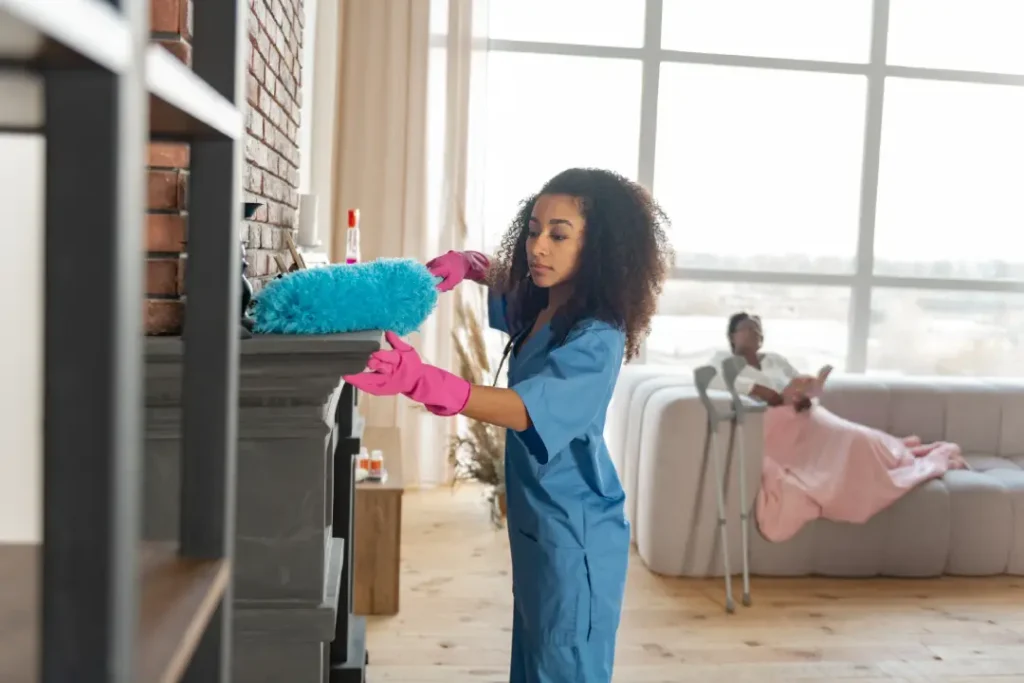
A biohazard clean leaves no visible trace once it is finished, which is exactly the point. What it should leave behind is a paper trail: proof of what was found, what was done about it, and where the waste ended up. Without that paperwork, a landlord, solicitor, or housing association has no way to demonstrate the work happened, no way to support an insurance claim, and no defence if the legality of the disposal is ever questioned.
This guide sets out the records a reputable biohazard cleaning company should provide, why each one matters, and what to ask for before booking a job in London or anywhere across the surrounding counties.
Biohazard cleaning covers a wide range of situations, from an unattended death to a serious safeguarding case, a trauma incident, or contamination discovered during a property clearance. Whatever the circumstances, the physical work is only half the job. A property that looks clean but has no supporting paperwork leaves the client exposed the moment anyone, an insurer, a solicitor, a regulator, or a family member, asks for evidence of what actually happened.
Why Documentation Matters After a Biohazard Clean
Biohazard cleaning sits in a different category to routine domestic or commercial cleaning. It often involves bodily fluids, hazardous waste, or materials linked to a death, a crime, or a serious safeguarding case. Every one of those circumstances can result in the work being scrutinised later, whether by an insurer assessing a claim, a solicitor settling an estate, a regulator reviewing a housing association’s void management, or a family member asking exactly what happened in a relative’s home.
Without proper records, none of these parties can verify that the clean was carried out correctly, that waste was disposed of legally, or that the property is genuinely safe to reoccupy. Documentation is not paperwork for its own sake. It is the evidence that turns a completed job into something that can withstand a question asked six months, or six years, later.
The Core Records a Reputable Company Should Provide
Risk assessment and method statement. Before work begins, a specialist company should produce a written risk assessment identifying the hazards present and a method statement setting out exactly how the job will be carried out. This should be provided before the clean starts, not written up afterwards to fill a gap.
Waste transfer note or consignment note. Any waste removed from a biohazard clean must be documented under the legal duty of care that applies to controlled waste in England and Wales. The government’s guidance on waste transfer notes explains what needs to be recorded for each load, including a description of the waste, how it was contained, and confirmation that it was handed to an authorised carrier. For biohazard or hazardous waste specifically, a consignment note is required rather than a standard transfer note, and this should name the licensed carrier and the site the waste was taken to.
Certificate of completion or decontamination. A written confirmation that the job has been finished to the required standard, signed off by the technician or manager responsible, gives the client something concrete to file alongside the property records. This is particularly important where the property needs to be reinspected before relet or resale.
Before and after photographic evidence. Photographs taken before work begins and once it is complete provide a visual record of the property’s condition and the standard of the finished job. This is useful evidence for insurers, and it protects both the client and the cleaning company if a dispute arises later about the state of the property.
Proof of insurance and waste carrier registration. A reputable company should be able to provide evidence of their public liability insurance and their registration as a licensed waste carrier, ideally before the job is booked rather than only on request afterwards.
Itemised invoice. A clear breakdown of labour, materials, and waste disposal costs supports any insurance claim, estate account, or internal budget record, and separates the cost of the biohazard element from any general cleaning also carried out on the same visit.
Records of any chemicals or disinfectants used. For sensitive sites, or where a property will be reoccupied by someone with health vulnerabilities, a record of the products used during decontamination allows any concerns to be checked against the relevant safety data.
How Documentation Supports Reinspection and Relet

A biohazard clean rarely marks the final step before a property is handed back to a landlord, sold, or reoccupied. In most cases, someone still needs to confirm the property is genuinely safe, whether that is a housing officer signing off a void, a surveyor completing a valuation, or a new tenant’s letting agent carrying out a final check.
Having a complete set of records ready for that stage removes a significant amount of friction. A housing officer with a certificate of completion, photographic evidence, and a waste consignment note in hand can sign off a void confidently and quickly, rather than requesting a fresh inspection or chasing the cleaning company for proof after the fact. A surveyor valuing a probate property can factor a documented decontamination into their assessment rather than treating the property’s history as an unknown risk. Even a private buyer, if the property’s background becomes relevant during a sale, benefits from a seller who can produce clear evidence that the situation was professionally resolved rather than simply painted over.
This is one of the most overlooked benefits of thorough documentation. It does not just protect against a future dispute. It actively speeds up everything that needs to happen next, because the people making decisions about the property are not starting from scratch.
Who Relies on These Records and Why
Solicitors and executors managing a probate estate need documentation to support the estate accounts and to demonstrate the clearance was carried out properly if a beneficiary later raises a question about how the property, or its contents, were handled.
Housing associations and councils need records to support internal void management reporting and to have evidence ready if a regulator, the Housing Ombudsman, or an internal audit asks how a specific high risk case was managed.
Landlords and letting agents rely on documentation to support insurance claims where a biohazard incident has caused damage, and to demonstrate to a new tenant, or to an inspecting officer, that the property has been properly decontaminated.
Family members dealing with a difficult situation in a relative’s home often want reassurance, in writing, that the work was carried out to a proper standard, particularly where the clean followed a death or a serious safeguarding concern. A related situation many families face is understanding how decomposition odours are removed from a property, where documentation of the process gives real peace of mind alongside the physical result.
What Happens Without Proper Documentation
The consequences of missing documentation are not just administrative. If waste has not been transferred to a licensed carrier with a proper record, both the cleaning company and, in some circumstances, the person who commissioned the work can be exposed to liability under waste duty of care legislation, since responsibility for controlled waste does not simply end once it leaves the property.
Insurance claims can also be delayed or rejected without evidence that a biohazard clean was carried out by a qualified provider following a proper process. Housing associations without a documented trail can struggle to defend a decision if a case is later reviewed, particularly one involving a safeguarding element. Families settling an estate can face awkward questions from beneficiaries if there is no record of how the property was handled, especially where valuable or sentimental items were present before the clean began.
None of this is likely if the work was carried out properly in the first place, but proving that after the fact is difficult, if not impossible, without the paperwork to back it up.
It is also worth being clear that the legal duty of care for waste does not sit solely with the cleaning company. Anyone who arranges for controlled waste to be removed from a property, including a housing association, a landlord, or an executor acting on behalf of an estate, has a responsibility to check that the waste is being handled by an authorised carrier. Working with a company that cannot produce a consignment note, or that cannot confirm its waste carrier registration, puts the client in that position of risk too, regardless of how the contract was worded.
How to Request Records From a Cleaning Company

Ask for documentation before booking, not after the job is finished. A company confident in its process will have no issue confirming, in writing, what records will be provided as standard. Useful questions to ask include whether a written risk assessment and method statement will be produced before work starts, whether waste transfer or consignment notes will be provided for anything removed from the property, and whether before and after photographs are part of the standard process rather than an optional extra.
It is also worth asking how long records are retained and how you can request a copy in future, since insurance claims, probate matters, or regulatory reviews can surface questions well after the job itself is finished.
A short checklist can make this conversation quicker for both sides. Before confirming a booking, ask the company to confirm in writing that they will provide a risk assessment and method statement before work starts, a waste transfer or consignment note for anything removed, before and after photographs, a certificate of completion, and an itemised invoice. If any of these are met with hesitation or a vague answer, that is worth treating as a warning sign rather than a minor gap to overlook.
What a Reputable Company Provides Without Being Asked
The clearest sign of a company that takes documentation seriously is one that provides it as a matter of course, rather than only when pushed. Every job carried out by a biohazard cleaning team should come with a full risk assessment and project plan from the outset, not produced retrospectively to satisfy a query.
This should extend to trauma related work as well. A trauma cleaning job, which often overlaps with biohazard work where a death or serious incident is involved, needs the same standard of legal compliance and record keeping, given the additional sensitivity around these cases and the likelihood that documentation will be reviewed by a solicitor, insurer, or family member afterwards.
Choosing a Specialist Cleaning Company Based on Documentation Standards
When comparing providers across London, Surrey, Middlesex, Watford, or Hertfordshire, documentation standards are one of the clearest ways to separate a genuinely specialist company from a general cleaning firm taking on work outside its usual scope. Ask to see a sample risk assessment or method statement before committing, and check that the company is listed on the Environment Agency’s public register of waste carriers rather than simply taking their word for it.
A provider working consistently across a wide area, rather than one that only occasionally takes on biohazard work, is also more likely to have a mature, repeatable documentation process, since they are producing these records regularly rather than assembling them from scratch for an unfamiliar job type.
A Step by Step Process From Start to Finish
- Initial assessment. The provider visits or reviews photographs, confirms the scope of work, and issues a written risk assessment and method statement.
- Written quotation. A cost breakdown is provided covering labour, materials, and anticipated waste disposal, so the client knows what to expect before work begins.
- The clean itself. Work is carried out following the agreed method statement, with photographs taken throughout to document the condition of the property and the process followed.
- Waste disposal. Any waste removed is documented on a transfer or consignment note naming the licensed carrier and disposal site.
- Completion and sign off. A certificate of completion is issued, along with the final invoice and any supporting photographic evidence.
- Record retention. Copies of all documentation are kept on file and can be provided again if needed for an insurance claim, probate matter, or regulatory review.
Frequently Asked Questions
Is a waste transfer note legally required for a biohazard clean? Yes. Waste removed from a property falls under the legal duty of care for controlled waste, and hazardous or biohazard waste specifically requires a consignment note naming the licensed carrier and disposal site.
How long should these records be kept? Waste transfer and consignment note retention periods are set by law, typically two years for standard controlled waste and three years for hazardous waste, though many providers keep records for longer as good practice. Other documents such as risk assessments and photographs are worth keeping for as long as the property or estate matter might be reviewed.
Can I request records after the job is already finished? A reputable company should be able to provide copies on request, though it is far better to confirm what will be provided before booking rather than chasing paperwork afterwards.
Do insurers require this documentation for a claim? Most insurers will expect evidence that a biohazard clean was carried out by a qualified provider, including proof of the work completed and, where relevant, confirmation that waste was disposed of legally.
What is the difference between a waste transfer note and a consignment note? A waste transfer note covers standard non hazardous controlled waste, while a consignment note is required specifically for hazardous waste, including most biohazard material, and includes more detailed tracking information about the carrier and disposal site.
Do you provide documentation for jobs across London and the surrounding counties? Full documentation, including risk assessments, waste transfer or consignment notes, and certificates of completion, is provided as standard for every job across London, Surrey, Middlesex, Watford, and Hertfordshire.
Getting Started
A biohazard clean should leave a property looking untouched and a paper trail that proves exactly what happened. Both matter. The physical result protects the people who use the property afterwards, and the documentation protects everyone involved if the work is ever questioned later, whether that question comes next week or several years down the line.
Housing associations, solicitors, landlords, and families all have different reasons for needing this evidence, but the underlying need is the same: proof that the job was done properly, by a qualified provider, with waste disposed of legally. A cleaning company that treats documentation as central to the job, rather than an afterthought, is worth the small amount of extra time it takes to check for upfront.
Vamoose Cleaning Services provides a full risk assessment, project plan, and complete documentation for every biohazard and trauma cleaning job across London, Surrey, Middlesex, Watford, and Hertfordshire. You can see feedback from clients we have worked with on our Google Business Profile, or get in touch to ask what records will be provided for your specific job.